English
 Nederlands
 Français
 Deutsch
 Italiano
 Русский
 Español


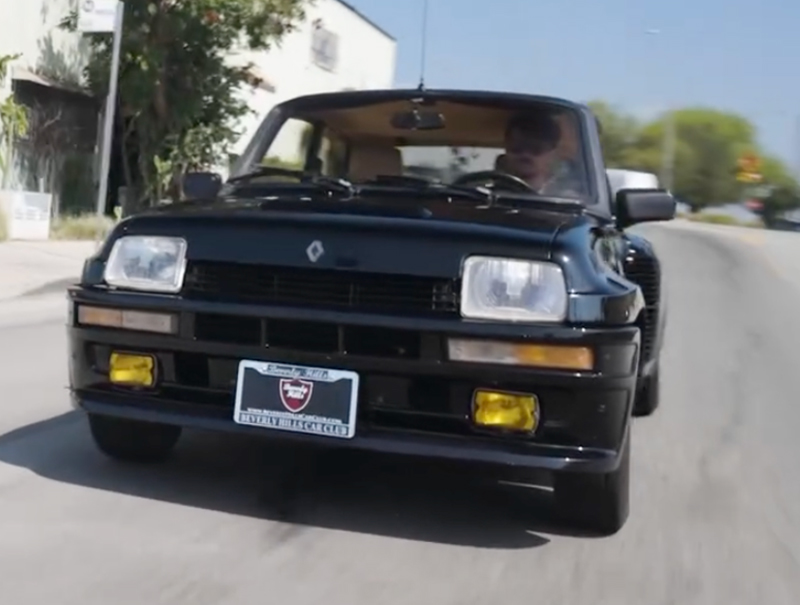
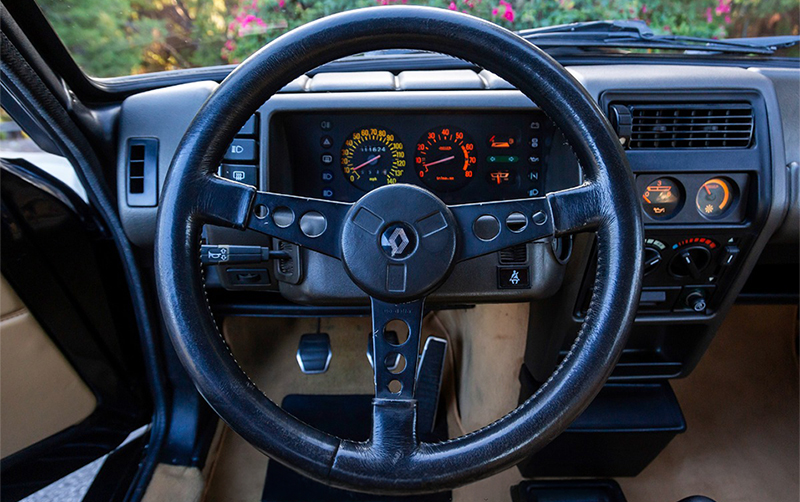
Open the driver’s door of a first-series Renault 5 Turbo and the argument for this car makes itself. The seats look like they were borrowed from a concept car. The dashboard wraps toward you in a shape no Renault showroom had seen before. The color scheme commits completely, with bold reds or blues covering surfaces that ordinary cars of the era left beige. Bertone’s studio, under Marcello Gandini, designed this cabin, and it remains one of the most recognizable interiors of the 1980s.
Renault 5 Turbo 1 Buyer
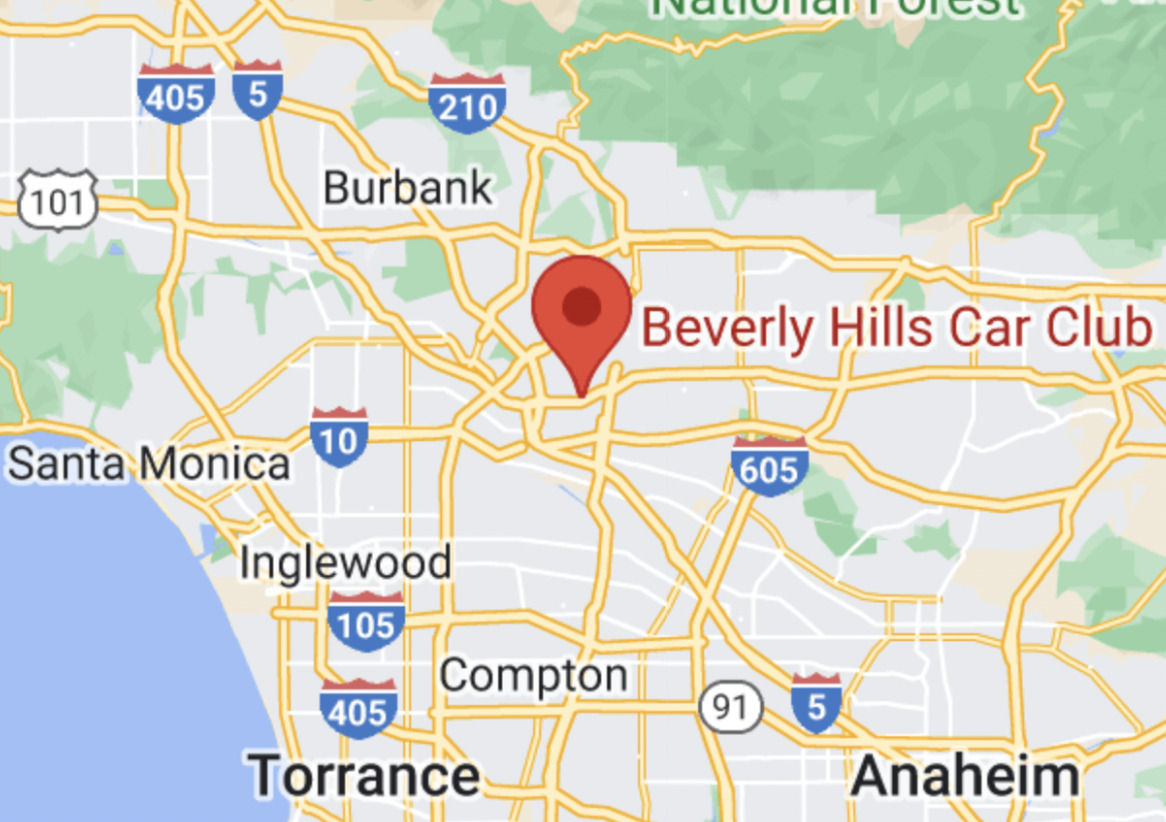
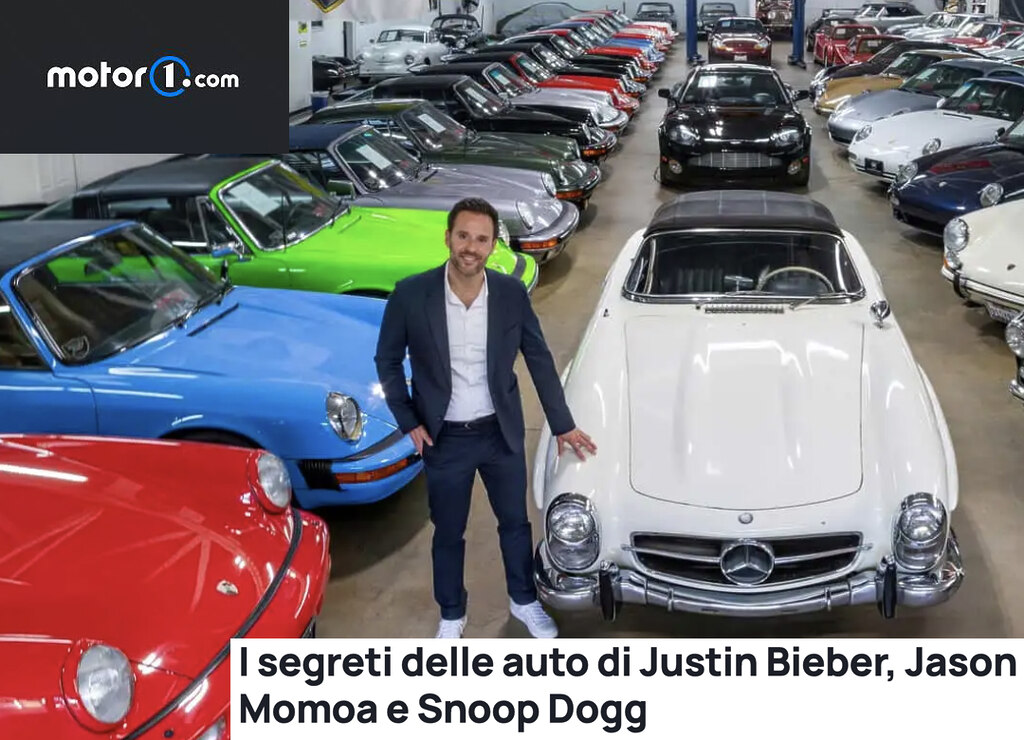
Beverly Hills Car Club Classic Cars Dealership
That interior is also the quickest way to tell that you own the original. The car now known as the Turbo 1 was the version Renault built to satisfy rally homologation, and it was engineered and trimmed with a level of specialization the company would later scale back. Aluminum roof, doors, and tailgate. Polyester wings and bonnet. A bespoke cabin. It was expensive to build, and Renault replaced it within a few years with a more economical successor. Collectors have been treating the first series as the definitive R5 Turbo ever since.
If you’re considering selling one, you have a car that sophisticated buyers on two continents actively seek out. You also have a car whose value depends heavily on proving what it is. Our team at Beverly Hills Car Club buys Turbo 1s directly, and if an offer is made and agreed to, we pay immediately and take care of the logistics, the title work, and the import questions that often come with these cars in the United States. When you’re ready to move forward, it can be that simple.
Built to Earn a Rally License, Not to Turn a Profit
The Turbo 1 existed because the FIA required Renault to build road cars before it could go rallying with a mid-engine 5. That purpose shaped every engineering decision.
Bodyshells came off the regular Renault 5 line and went to coachbuilder Heuliez in Cerizay, which reinforced and reworked them and fabricated the pressed-aluminum roof, doors, and tailgate. Final assembly took place at the Alpine works in Dieppe. The rear suspension drew on the Alpine A310, the five-speed gearbox came from the Renault 30, and the 1,397cc engine gained a Garrett turbocharger, an intercooler, and Bosch K-Jetronic injection for 160 horsepower. Period sources list the first series as both lighter and slightly torquier than the car that replaced it.
Then the car went out and justified itself. Jean Ragnotti’s win at the 1981 Monte Carlo Rally, achieved in the first full season after production began, gave the Turbo 1 a competition pedigree that still drives collector interest today.
Not Every Turbo 1 Is the Same Car
Owners are sometimes surprised to learn that the market recognizes distinctions within the first series itself.
Early cars. The 1980 and 1981 production carries the full specification: aluminum doors, roof, and tailgate, and the complete Bertone interior. For many collectors, these are the most desirable road-going R5 Turbos of all.
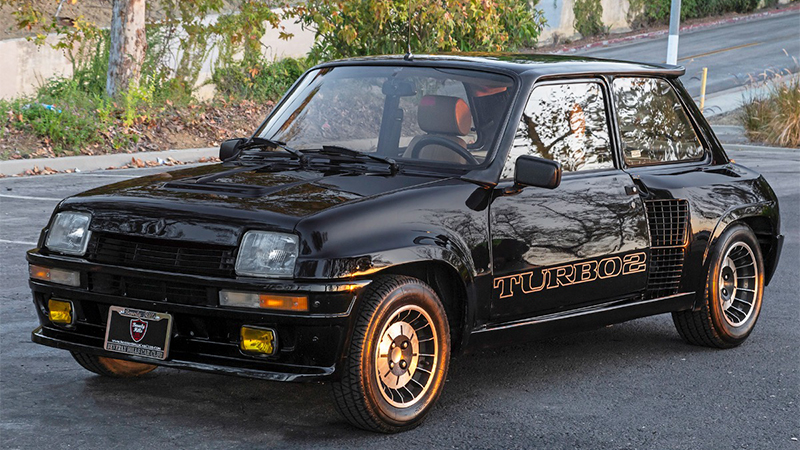
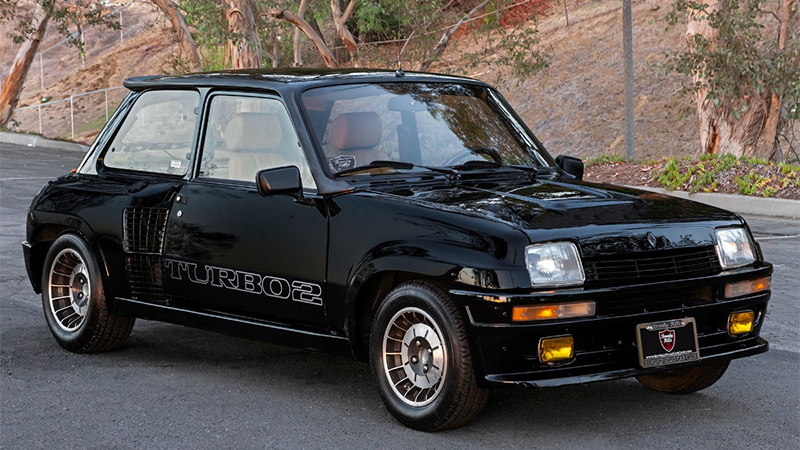
Later first-series cars. Some 1982-production Turbo 1s left the factory with steel doors and electric windows, as Renault began moving the specification toward what became the Turbo 2. These are genuine Turbo 1s, but they sit differently in the market than early aluminum-door cars, and accurate identification matters.
Factory color combinations. Red and blue cars with color-coordinated cabins define the look, and blue cars with contrasting orange trim accents are especially sought after. Pearl white examples were delivered with more conservative beige interiors. A car repainted outside its factory color, or retrimmed in an incorrect scheme, is valued as such by knowledgeable buyers.
Competition and evolution cars. Renault also built rally-specific versions developed from the Turbo platform. If your car is represented as one of these, its value rests almost entirely on documentation and verified chassis records.
Questions Turbo 1 Owners Ask
“How do I prove my car is really a Turbo 1?” Start with the chassis plate, typically found on the right-hand front inner wing, and the chassis number itself, which carries the 822 project designation. Then look at the specification: aluminum doors on early cars, the aluminum roof and tailgate, and the Bertone interior. Original French registration documents, factory or Alpine production records, and service history from recognized specialists complete the picture. The more of that chain you can show, the more confidently a buyer can pay for it.
“My car has a different interior from the photos I’ve seen. Does that matter?” It matters significantly. Turbo 2-style interiors were sometimes fitted to first-series cars after damage or wear, and Bertone-style components have been fitted to Turbo 2s to make them look like originals. A Turbo 1 with its correct factory interior intact is a different proposition from one that has lost it. Original seats with worn fabric are generally worth more than incorrect seats in perfect condition.
“There’s damage to an aluminum door. Is that a big problem?” It’s a pricing factor rather than a deal-breaker. Aluminum doesn’t respond to repair the way steel does, and correct replacement panels are scarce. Where aluminum panels meet steel, galvanic corrosion slowly develops, often appearing as bubbling paint along edges and mounting points. We look at how extensive it is and whether original panels remain on the car.
“Where else should I look for rust?” The aluminum panels draw attention, but the steel structure underneath is where the serious costs live. Check the floor pans, the sills, the jacking points, and the bulkhead behind the seats, which endures decades of engine heat and condensation. Inspect the scuttle beneath the windshield and the steel inner structure hidden behind the composite rear flares, including the mounting points for the rear suspension. Proper structural repair requires specialist metalwork and can represent a significant share of the car’s value, so documented repair work counts in your favor.
“It hasn’t run in years. Should I get it running before I sell?” Not necessarily. Reviving a long-stored Turbo 1 often means addressing the K-Jetronic fuel system, the turbocharger seals, the cooling system, and decades-old rubber that has hardened in the hot engine bay. Doing that work in a hurry, or with someone unfamiliar with the car, can create more problems than it solves. We regularly buy non-running cars and price them on what they actually need.
“What will the engine and gearbox need?” That depends on history. Turbo smoke, low compression, or a tired injection system all point toward a specialist rebuild, which often means sourcing parts from Europe. The gearbox is durable, but its long linkage wears, and synchros suffer on cars that were driven hard. Each of these affects price in proportion to the work needed, and a documented recent rebuild by a recognized specialist is one of the strongest value supports a Turbo 1 can have.
“My car was rallied or modified. Is it still desirable?” Often, yes. Documented period competition history can add real interest. Upgrades that can be reversed, with original components retained, do less harm than permanent changes. A first-series car that has lost its aluminum panels, its interior, and its original engine faces a narrower market, and we’ll explain plainly how that affects our number.
“I’ve owned it for thirty years. How do I know it’s going somewhere good?” Ask us. Many Turbo 1 owners went to extraordinary lengths to own one in a country Renault never served, and that history matters. Our team is made up of enthusiasts before buyers, and we care about where these cars go next.
Sending Us Your Car’s Story
For a Turbo 1, a few specific photos help us move quickly and give you a more precise offer:
- Exterior from all angles, plus close-ups of door edges, the roof, and the tailgate
- The interior in detail: seats, dashboard, door cards, and steering wheel
- The chassis plate and any visible factory markings
- The engine bay and, if possible, the underside and inner wheel arches
- Any rust, damage, or areas you have questions about
- Documentation: European registration papers, import file, service records, receipts

Call Now 888-848-4771
Email [email protected]
Recent Testimonials:
Joseph K.
1993 Porsche 964 Carrera 2 Cabriolet
October 28, 2026
“Very helpful even though we gave him A hard time, and we went back and forth for two weeks, but finally he was able to close the deal where I was happy, and he was happy. Daphne will do more business with him and the company, as everything went smooth sailing, and I love the new car that I just picked up. 10 out of 10 experience. Will recommend to all my friends.”
Einar K.
1970 Mercedes 300SEL 6.3
October 28, 2026
“Valerie was extremely helpful in every way possible with the sale of our old Mercedes Benz which had been very dear to my husband’s heart but for a number of reasons had fallen into a state of disrepair and needed to be sold. Thank you Valerie for expediting everything very smoothly and to Tina for initial start to the sale.”
Katrina T.
1985 Ferrari Mondial Quattrovalvole
October 27, 2026
“Very quick, easy and transparent! Appreciate everyone’s friendliness!”
Walter P.
1984 Porsche 911 Carrera Targa
October 27, 2026
“I sold my 1984 Targa to Alex. After some preliminary discussions, we agreed to a deal on a Thursday; the funds were in my account by Friday; a truck picked up the car on Saturday. His staff is very efficient and on top of things. I opted for the convenience of a quick, easy sale and Alex made it all work.”
Paul D.
1963 Austin-Healey 3000
October 25, 2026
“Sam made a very good impression on me. Professional, attentive, punctual, patient. As expected of a reputable company. THANK YOU!”
Karen H.
1995 Porsche 911 Carrera Cabriolet
October 24, 2026
“Mr. Manos was extremely professional. He had the carrier all set up for transportation from Georgia to California in days. It was very quick. I which I knew of him earlier. I sold a midget spitfire. I wish it was to him. I know it will be taken care of.”
Jeff S.
1960 MG A 1600
October 23, 2026
“An awesome team makes all the difference! Great energy, great teamwork. Thank You!”
Next Steps?
Call Now
Or email via our website and we’ll go over all you need to know to sell your classic!
Send Photos
Just send a few photos, this is often all we need to make an offer.
Get Paid!
You get you paid, and then we’ll pick up the vehicle – IT’S THAT SIMPLE!
Get Started!
Welcome!
join our inventory newsletter
Sign-up for our e-mail alerts
join our newsletter
Sign-up for our e-mail alerts
Learn More
or
we buy classic cars
Looking to sell yours?
Contact us
Sell us your car
Pick up from any USA location - Any condition - Top $$$ Paid


Chat With Us!