 English
 Nederlands
 Français
 Deutsch
 Italiano
 Русский
 Español


The 1967 Camaro was a rush job, and good as it was, it went out the door with a list of things the engineers wanted another try at. The 1968 car is that second try. Chevrolet spent the year fixing what the first cars had gotten wrong: the rear axle that hopped under hard launches, the draughty vent-window doors, the limited Z/28 program. At the same time, Washington was handing down its first round of federal safety and emissions rules. The 1968 Camaro is what came out of both pressures at once, and it’s a better-sorted car than the one before it.

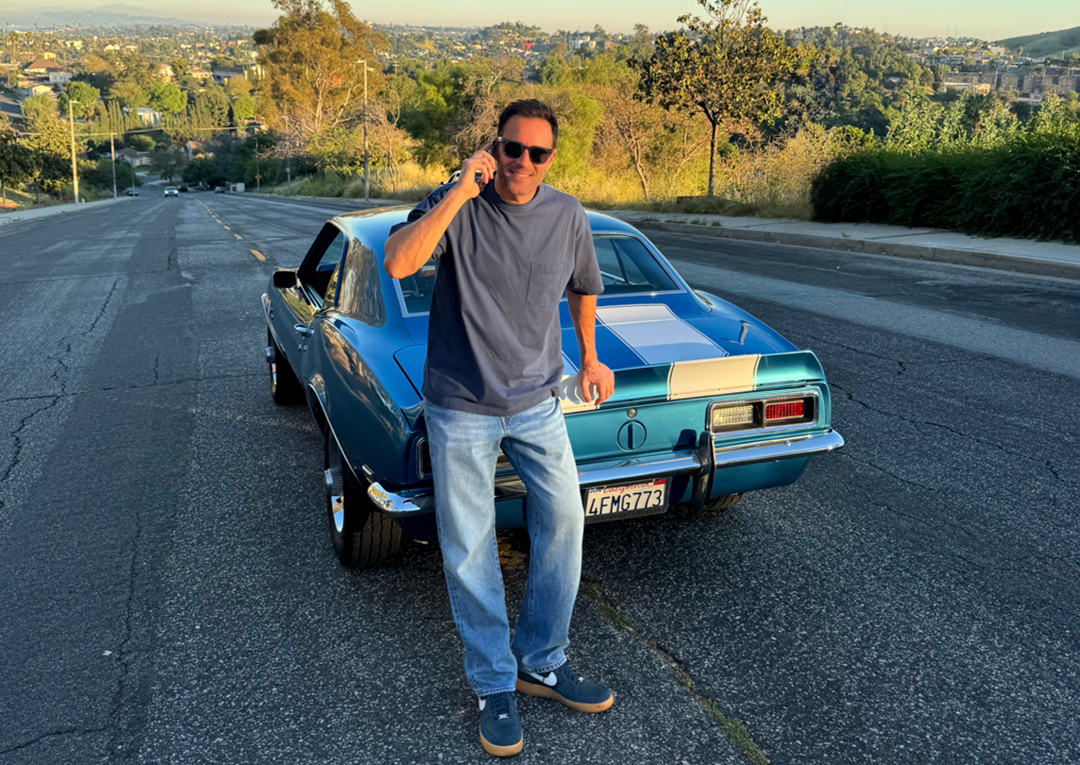
1968 Chevrolet Camaro Buyer, The Second Pass
Beverly Hills Car Club – we buy classic cars nationwide
For a long time the market didn’t reward that. The 1967 had the first-year story and the 1969 had the iconic sheet metal, and the 1968 sat between them as the sensible choice. That gap has narrowed a good deal as collectors have come to value the year for what it is. It’s the first generation car that drives best in stock form, and it was the Z/28’s real breakout year.
Why Beverly Hills Car Club?
We have been buying cars like yours since Alex Manos started the business in Los Angeles in 2004. Today our team buys across the 48 continental states and Hawaii, with a track record spanning thousands of makes, models, and conditions, from concours cars to estate-sale projects with title problems attached. For most 1968 Camaro owners, selling to us directly offers the best mix of fair pricing, speed, and certainty. Auction and private sale are real alternatives, though, and this page covers them honestly alongside everything we look at when we assess a car.
Vent Windows Out, Side Markers In: Spotting a 1968
Most of the 1968 changes are visible from across a parking lot, and they’re the first things we check for correctness.
The door glass is one piece. The vent windows were gone, replaced by Astro Ventilation: fresh-air outlets in the dash that let the car breathe with the windows up. A 1968 with vent-window doors has had a door swap at some point, and it’s worth knowing that before anyone else points it out.
Side marker lights appear on all four corners. Federal rules required them, and they’re the fastest way to tell a 1968 from a 1967. The fronts are small amber lenses and the rears are red.
The grille is more pointed than the flatter 1967 piece, and the taillight lenses are divided. On Rally Sport cars, the backup lights moved down below the rear bumper. Parts that look close enough to someone who doesn’t know the year are exactly the ones a knowledgeable buyer notices.
The interior carries over in overall layout but picks up year-specific details around the ventilation outlets and trim. Cars built after the start of calendar 1968 also got front shoulder belts. A missing belt is an easy fix, but it tells us something about how carefully the car has been kept.
The rear suspension was fixed. The worst of the 1967 cars’ wheel hop was dealt with on the high-performance models: staggered rear shocks, one ahead of the axle and one behind it, and multi-leaf rear springs on the heavier-duty cars. This is why 1968 SS 396 and Z/28 cars drive noticeably better than their first-year counterparts. It also means we check that the staggered mounting is intact and the correct springs are in place, because a 1968 converted to later or aftermarket hardware loses part of its year-correct story.
The Z/28 grew up. In 1967 the Z/28 was close to a secret. In 1968 it became a real production car, with many times the first year’s output, as racing success in the Trans-Am series pulled buyers into showrooms. The 302 stayed the heart of it: a solid-lifter, high-revving small block rated conservatively and understood to make considerably more than its sticker figure.
- Chevrolet Camaro First Generation
- Chevrolet Camaro First Generation hardtop
- Chevy Camaro First Generation convertible
- Chevrolet Camaro First Generation RS
- Chevrolet Camaro First Generation SS
- Chevrolet Camaro First Generation Z/28
- 1967 Chevrolet Camaro
- 1968 Chevrolet Camaro
- 1969 Chevrolet Camaro
- 1967 Chevrolet Camaro hardtop
- 1968 Chevrolet Camaro hardtop
- 1969 Chevrolet Camaro hardtop
- 1967 Chevrolet Camaro convertible
- 1968 Chevrolet Camaro convertible
- 1969 Chevrolet Camaro convertible
- 1967 Chevrolet Camaro RS
- 1968 Chevrolet Camaro RS
- 1969 Chevrolet Camaro RS
- 1967 Chevrolet Camaro SS
- 1968 Chevrolet Camaro SS
- 1969 Chevrolet Camaro SS
- 1967 Chevrolet Camaro Z/28
- 1968 Chevrolet Camaro Z/28
- 1969 Chevrolet Camaro Z/28
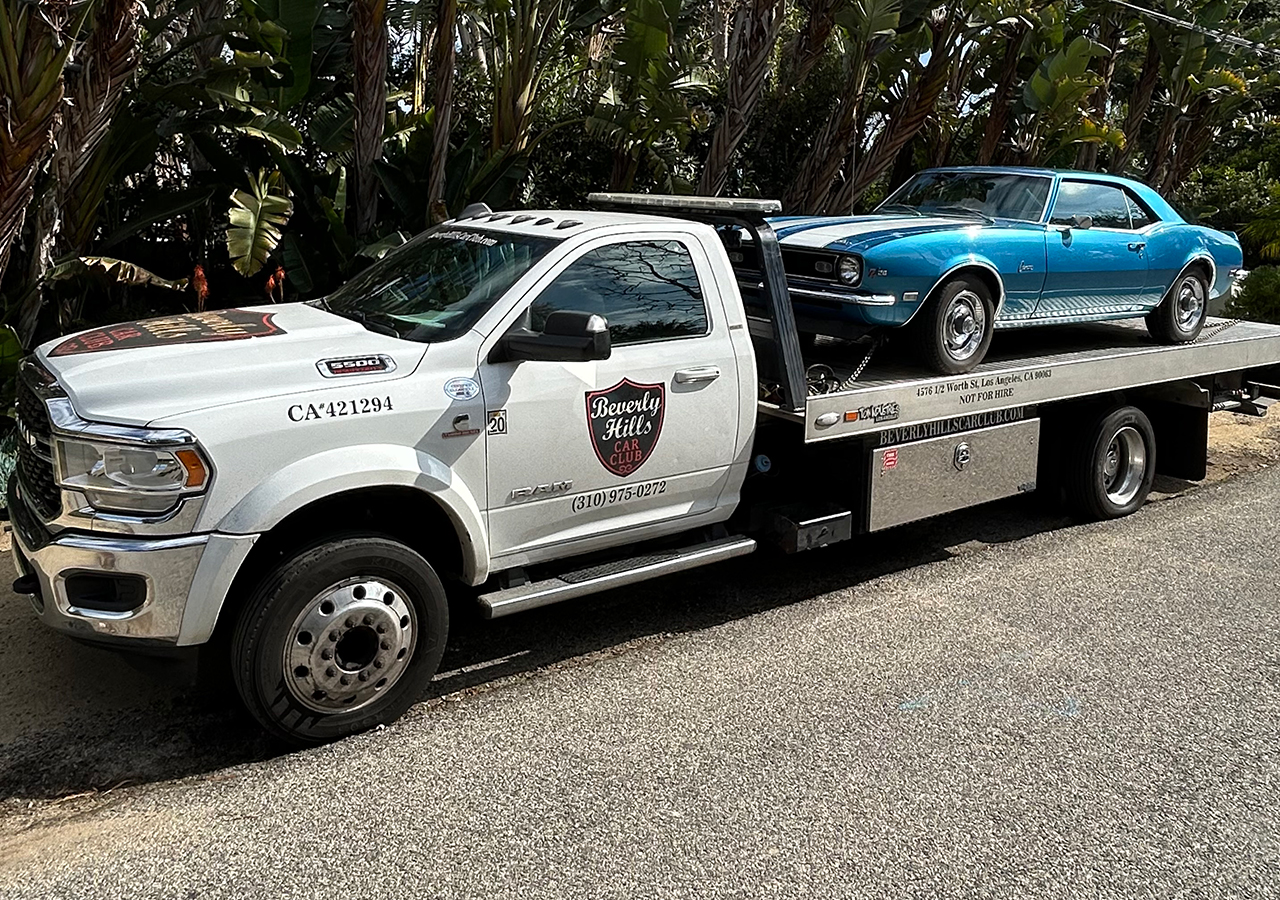
Questions 1968 Owners Ask Us
“There’s rust. Is that a deal-breaker?” Almost never. It’s a pricing factor, and we’ve bought 1968 Camaros with every kind of rust. The worst of it usually starts at the cowl plenum under the base of the windshield, which traps debris and water and rots from the inside, sending moisture into the toe boards, kick panels, and inner rockers. From there we look at the floor pans, the trunk floor and rear drop-off panels, the channel below the rear window (especially on vinyl-top cars), the lower quarters ahead of and behind the wheel openings, the wheelhouses, the door bottoms, and the rear frame rails where they pass over the axle. The front subframe gets checked at its body mounts. Convertibles add the torque boxes and lower A-pillars, where rust is a structural issue rather than a cosmetic one. Reproduction sheet metal for these cars is excellent, so most rust is repairable.
“It needs mechanical work. How much does that hurt?” Less than most owners expect. Small blocks, Powerglides, Turbo 350s, and 12-bolt and 10-bolt rear axles have about the deepest parts supply in the hobby, and routine rebuilds sit at the modest end of classic-car costs.
“It’s been modified. Does that kill the value?” It depends on the build. A well-executed pro-touring or restomod 1968 with quality parts and receipts has a real following. What costs value is the half-finished build, the mix of eras that doesn’t hang together, or cutting done to a shell that was worth more untouched. If you kept the original parts, tell us.
“It’s apart. Will you still look at it?” Yes. Bodies on rotisseries, drivetrains on pallets, boxes of labeled parts: if the major components are present, we’re interested. If significant pieces are missing, we’ll say so directly rather than make an offer we’d later want to change.
“The car is part of an estate / a divorce / a storage situation.” That’s familiar ground for us. We work with executors and estate attorneys, understand probate timelines, and can move quickly or wait as the process requires. In a divorce, one assessment and one number, with immediate payment if an offer is made and agreed to, takes a difficult conversation off the table.
Us vs. the Alternatives: What Actually Reaches Your Account
Private sale has the highest theoretical ceiling and asks the most of you. Expect a steady flow of inquiries, most of them not serious; viewings scheduled and missed; inspection contingencies; financing that may not come through; and, on any SS 396 or Z/28, a detailed authentication conversation repeated with every knowledgeable prospect.
Auction gives the widest exposure, which is valuable for a documented Z/28, an aluminum-head big-block car, or a dealer 427 with its paperwork intact. The costs are real and mostly due whatever the result: a seller’s commission typically around ten percent, transport to the venue, and insurance and storage during consignment. The timeline usually runs a few months from signing to payment.
A direct sale to us gives up that theoretical ceiling in exchange for certainty. You send information, we assess the car, and if an offer is made and agreed to, you get a specific number. It isn’t a range, and it isn’t subject to a later inspection rewriting the terms. Payment is immediate. We arrange pickup anywhere in the country and handle the paperwork, including the complicated cases. We don’t renegotiate after agreement.
What to Send and What Happens Next
Send photos of the full exterior, the interior, the engine bay, the trunk with the mat lifted, and the underside if it’s safe to reach. Include a clear shot of the cowl tag and the stamped pad on the front of the engine block if you can. Add the VIN, your ownership history, and what you know needs attention. We reply within 24 to 48 hours, often sooner!
Call Now 888-848-4771
Email [email protected]
Recent Testimonials:
Giacomo C.
1959 Cadillac Series 62
September 18, 2026
“I found the experience very positive and professional. A fair price, helpful staff, efficient, friendly and knowledgeable. I would recommend them any day.”
Ramon L.
1991 Volkswagen Cabriolet Etienne Aigner Edition
September 17, 2026
“Gevik was very helpful and proactive.”
Carlos D.
1988 Porsche Carrera Cabriolet
September 17, 2026
“I had a great experience selling my 1988 Porsche 911 Carrera Cabriolet to Alex Manos and the team at Beverly Hills Car Club. Abraham is a great negotiator-professional, responsive and a pleasure to work with throughout the entire process. We were able to come to a deal that worked for both of us, and from there everything was handled quickly and seamlessly. A special thank you to Edith and Robert, who made the final paperwork, title transfer and pickup incredibly easy and were wonderful to deal with. Selling a classic car you’ve owned for many years can be bittersweet, but knowing it was going to people who appreciate these cars made it a little easier. Thank you to Alex, Abraham, Edith, Robert and the entire team for making it such a positive experience.”
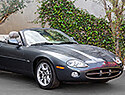
William M.
2001 Jaguar XK8
September 17, 2026
“Very helpful responses.”
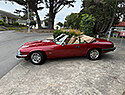
Claire S.
1993 Jaguar XJS Convertible
September 16, 2026
“The team was very prompt, clear and timely in communications! It made the sale process very easy despite our busy schedules.”
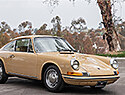
Rand W.
1969 Porsche 912 Coupe
September 16, 2026
“Vehicles follows up quickly, which is the MOST important trait of a Car Salesman!”
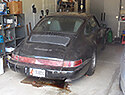
Stanley S.
1989 Porsche Carrera 4 Coupe
September 15, 2026
“Alex was pleasant to deal with. He quickly agreed to my price and electronically sent me the full amount to my checking account.”

Next Steps?
Call Now
Or email via our website and we’ll go over all you need to know to sell your classic!
Send Photos
Just send a few photos, this is often all we need to make an offer.
Get Paid!
You get you paid, and then we’ll pick up the vehicle – IT’S THAT SIMPLE!

Get Started!
Welcome!
join our inventory newsletter
Sign-up for our e-mail alerts
join our newsletter
Sign-up for our e-mail alerts
Learn More
or
we buy classic cars
Looking to sell yours?
Contact us
Sell us your car
Pick up from any USA location - Any condition - Top $$$ Paid


Chat With Us!