 English
 Nederlands
 Français
 Deutsch
 Italiano
 Русский
 Español



 Facebook
 Youtube
 Twitter
 Instagram
 Pinterest
 LinkedIn
Good heavens: this car looks so classy, this 1960 Mercedes-Benz 220SE Sunroof Coupe.

Car Tales: Classiness Personified, Mercedes-Benz 220SE Sunroof Coupe
To think that back then, within that year, Mercedes-Benz canceled the line, considering that it appeared out of date, a period piece.
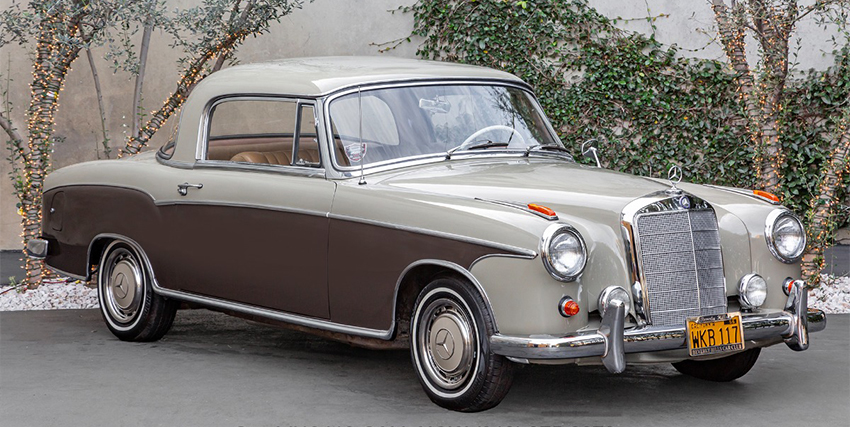
Good heavens: this car looks so classy, this 1960 Mercedes-Benz 220SE Sunroof Coupe. To think that back then, within that year, Mercedes-Benz canceled the line, considering that it appeared out of date, a period piece.
Now it looks as though it is just the car I would love to see pulling up outside my house. Preferably with a gift certificate tucked on the edge of the windscreen – to me! An added bonus would be that our Mercedes-Benz 220SE is also rare, one of only 830 produced in the model years 1959 and 1960.
And not only does it look great, at the time of its birth it would have been considered one of the very safest cars you could step inside – all due to its crumple-zone concept.
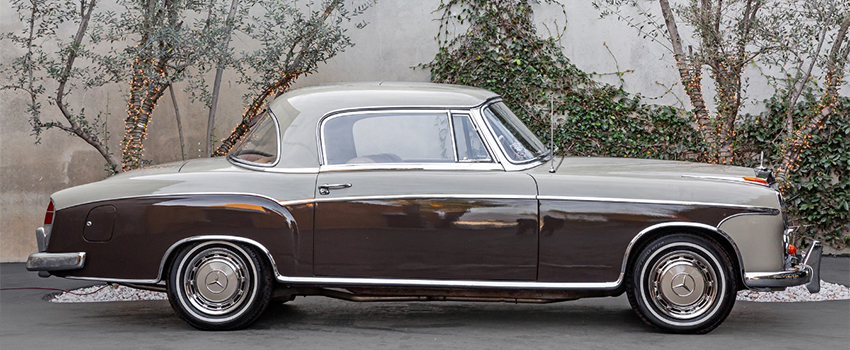
The Mercedes-Benz 220SE was known as a ‘Ponton’, the German word for ‘pontoon’, which referred to its ponton styling, clearly evident on the car we presently have in stock at Beverly Hills Car Club: our 1960 Mercedes-Benz 220SE, replete with its articulated hood, body, fenders and running boards into a singular, often slab-sided envelope.
At the time, Mercedes itself did not refer to any of its cars using that nickname. Throughout its previous decade Mercedes stretched the ‘Ponton’ saloons into a range that became the automaker’s dominant production models until 1959.
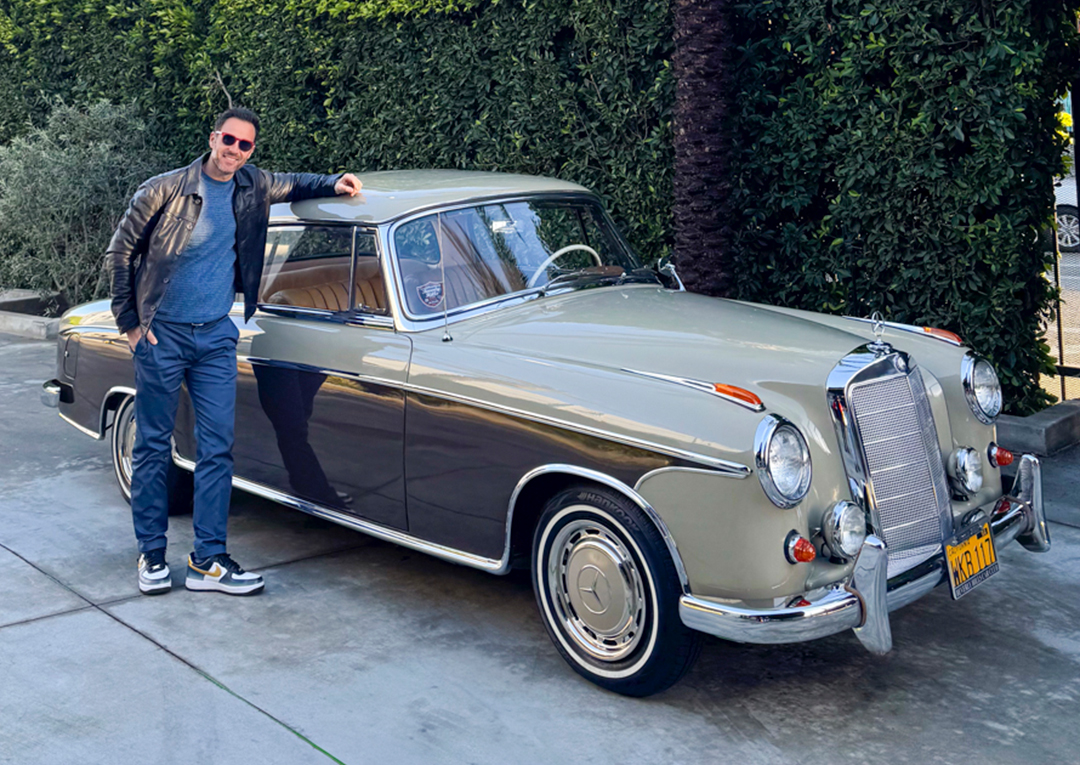
So let’s get down to the details of our beautiful car. This 1960 Mercedes-Benz 220SE Sunroof Coupe is a timeless pillarless coupe that perfectly captures Mercedes-Benz elegance and engineering from the golden era. Finished in its exquisite factory color Havana Brown (Havanabraun) DB-408G, this California car is complemented by a rich Cognac interior, creating a warm, sophisticated color combination that looks great.
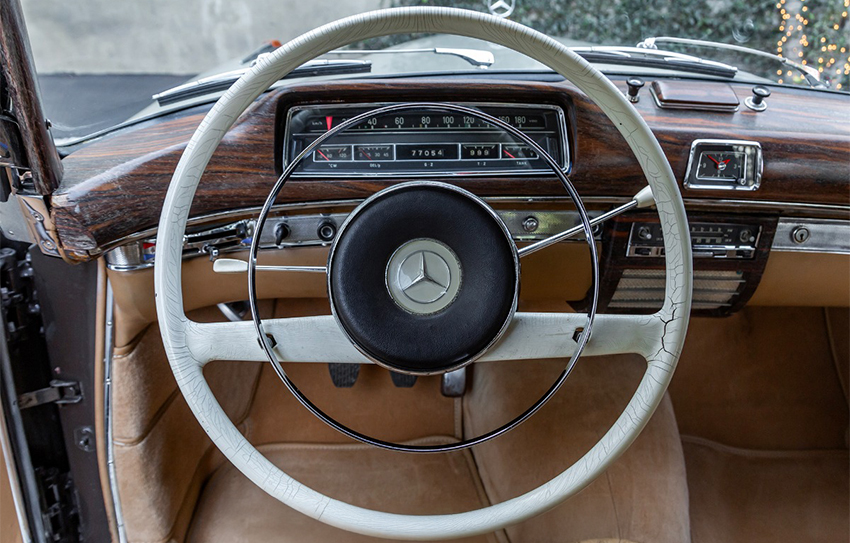
Power comes from the desirable fuel-injected M127 inline-six, paired with a 4-speed manual transmission that delivers an engaging, analog driving experience. Additional equipment includes a single exhaust outlet, VDO instrumentation, front fog-lights, a two-spoke steering wheel with chrome horn ring, extensive chrome accents, wrap-around chrome bumpers with overriders, and a beautifully finished wood dashboard.
The car rides on Hankook white-line tires mounted on steel wheels with Mercedes-Benz hubcaps, and a full-size spare is neatly stored in the trunk. Inside, the cabin showcases low-rise bucket seats, a rear bench seat, manual-crank windows, glove compartment, door pockets, Becker Mexico radio, and a fender-mounted antenna. The interior reflects period-correct design and materials, highlighting Mercedes-Benz’s renowned craftsmanship and attention to detail during this era.
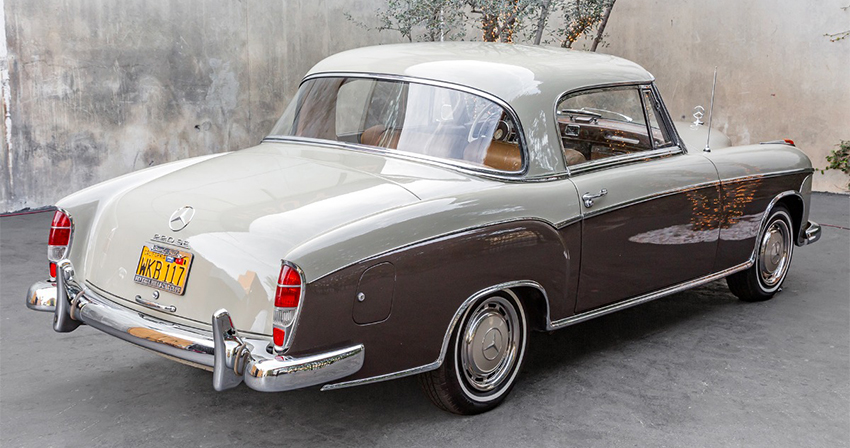
The 220SE was one of the earliest production cars in the world to feature Bosch mechanical fuel injection, technology derived directly from Mercedes-Benz racing programs – an innovation that set new standards for performance and reliability in luxury automobiles. Do not miss this opportunity to acquire a classic 220SE Ponton Sunroof Coupe that combines elegance with engineering pedigree and is also mechanically sound.
But as I said earlier, our 220SE Ponton Sunroof Coupe also had the considerable benefit of being born in the ‘crumple-zone.’ Austrian-Hungarian engineer Bela Barenyi originally invented and patented the crumple-zone concept in 1937 before he worked for Mercedes-Benz, and in a more developed form in 1952.
Barény questioned the prevailing opinion until then, that a safe car had to be rigid. He divided the car body into three sections: the central, rigid, non-deforming passenger compartment, and the crumple zones in the front and the rear.
They are designed to absorb the energy of an impact (kinetic energy) by deformation during collision.
The 1953 W120 ‘Ponton’ partially implemented the concepts of crumple-zones and the non-deformable passenger cell into its ‘three-box design’ by having a strong deep platform to form a partial safety cell (patented in 1941). The Mercedes-Benz crumple-zones patent (number 854157) granted in 1952, describes the decisive feature of passive safety.
But it came to fullness with the 220SE Ponton Sunroof Coupe.
The 1959 Ponton’s design concept was proven by the crash test facility at ADAC – Europe’s largest automobile association now with 21 million members – in June 2010 when a Mercedes Ponton was crash-tested in their Technical Centre in Landsberg am Lech in south-west Bavaria, confirming the existence of the design incorporated into the vehicle. This made for a milestone in car design with front and rear crumple-zones for absorbing kinetic energy.
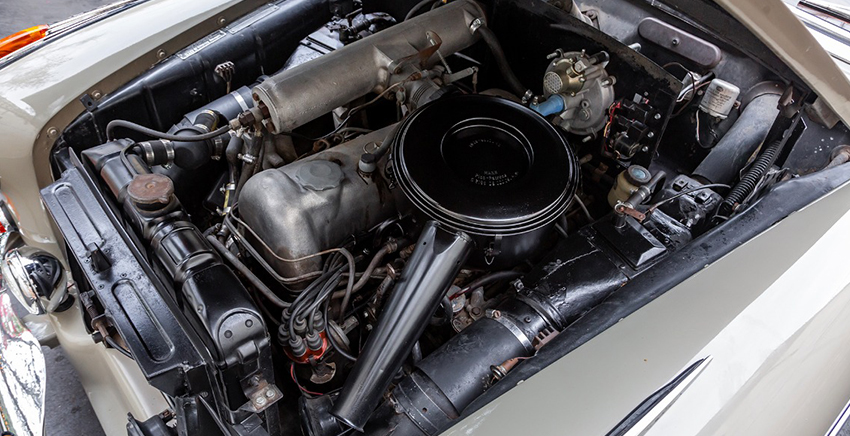
By the time of the arrival of the 220 SE the crumple-zone had been developed by Mercedes-Benz to be standard practice in the design and build of its cars.
Though it is hopefully not a circumstance in which you will ever need to test out the crumple-zone, the Mercedes-Benz 200 SE had a 0-60 mph time of 11.6 seconds, a top speed of 96 mph, and a quarter mile drag time of 18.6 seconds.
But as a marvelous concept the crumple-zone moved on life in quite a literal manner.
Safe driving!
-Alex Manos, Owner



Get Started!
Welcome!
join our inventory newsletter
Sign-up for our e-mail alerts
join our newsletter
Sign-up for our e-mail alerts
Learn More
or
we buy classic cars
Looking to sell yours?
Contact us
Sell us your car
Pick up from any USA location - Any condition - Top $$$ Paid


Chat With Us!