 English
 Nederlands
 Français
 Deutsch
 Italiano
 Русский
 Español


 Facebook
 Youtube
 Twitter
 Instagram
 Pinterest
 LinkedIn
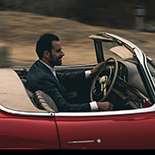
A head-turning Bentley S3 was the car in which Rolling Stones’ Keith Richards, Brian Jones and their mutual lover Anita Pallenberg powered through France and Spain in 1967, heading for Morocco.

Car Tales: Unique, Bentley S3 Left-Hand Drive
That model was a 1965 iteration, a Continental Flying Spur Sports Saloon.
A head-turning Bentley S3 was the car in which Rolling Stones’ Keith Richards, Brian Jones and their mutual lover Anita Pallenberg powered through France and Spain in 1967, heading for Morocco. That model was a 1965 iteration, a Continental Flying Spur Sports Saloon.
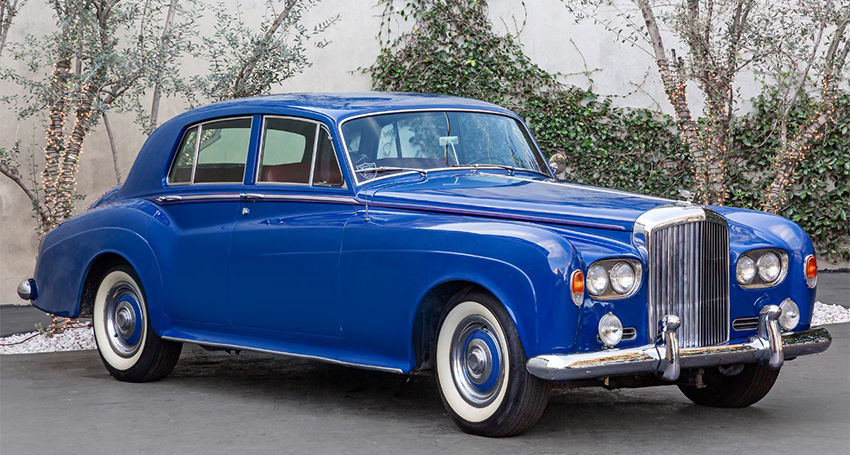
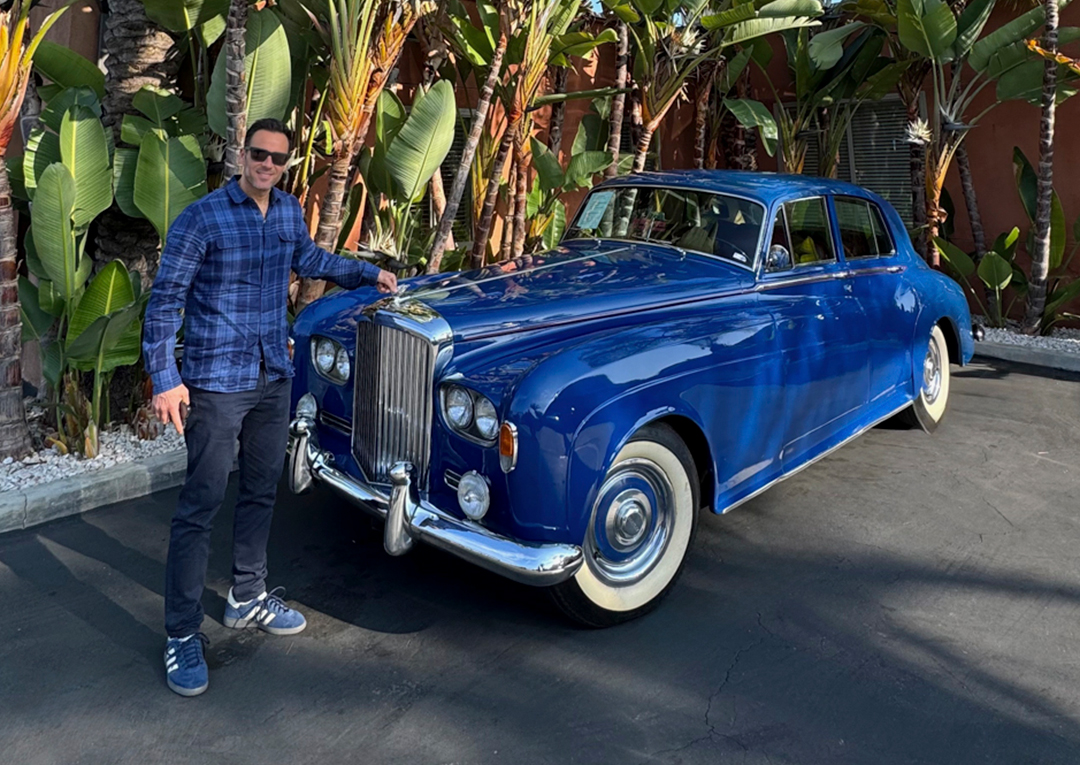
And at Beverly Hills Car Club we have a model at the moment that is two years earlier, a left-hand-drive 1963 Bentley S3 Saloon, such an elegant motorcar that is finished in striking Royal Blue over a sumptuous red interior, beautifully complemented by rich Burr Walnut veneer trim throughout the cabin. This Bentley represents the pinnacle of British luxury from the early 1960s, combining stately presence, handcrafted refinement, and optimal V8 performance in Bentley’s inimitable and unique style.
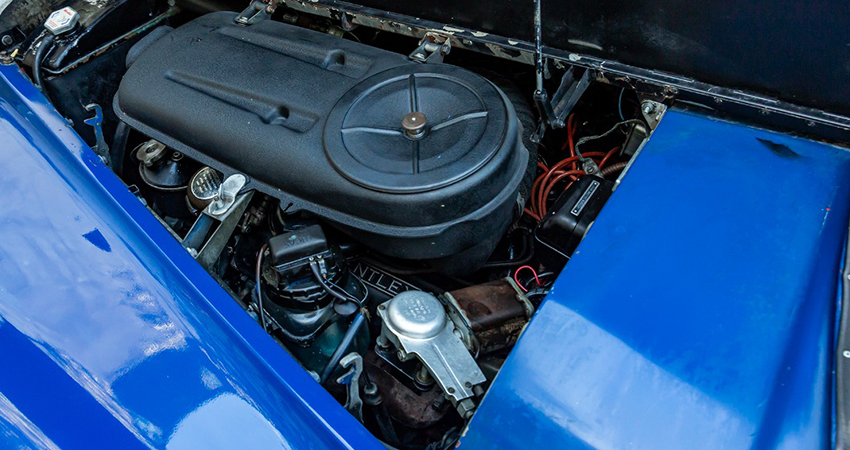
Under the hood lies a V8 engine fed by dual SU carburetors, paired with a column-shifted automatic transmission. Power steering and air conditioning enhance drivability and comfort, making this S3 as enjoyable on modern roads as it was in its day. Notably, the Bentley S3 was the first Bentley model to feature the iconic quad-headlamp layout, a design cue that defined the marque’s luxury saloons for decades to follow.
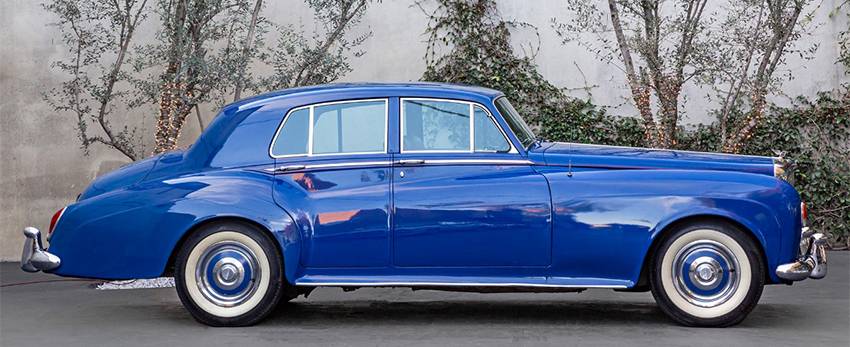
The exterior is adorned with quad headlamps, front fog lights, chrome bumpers with overriders, and classic Bentley hubcaps mounted on 15-inch wheels wrapped in Remington Cushion Aire whitewall tires. A single exhaust outlet, driver fender-mounted side mirror, and period-correct details complete its timeless silhouette.
Inside, the cabin is a masterclass in old-world craftsmanship. The inviting divided front bench seat, 3-spoke steering wheel, and elegant Smiths instrumentation surround the driver in classic luxury. Additional amenities include power windows, folding picnic trays, a dash-mounted rearview mirror, Kienzle analog clock, AM/FM radio, and a fender-mounted antenna, all designed to make every journey refined and relaxing.
This Bentley S3 Saloon offers an opportunity to own a true luxury icon from the golden era of British motoring: graceful, powerful, and meticulously appointed. Do not miss the opportunity to own this opulent S3 Saloon that is mechanically sound.
The Bentley S3 was a four-door luxury car produced by revered Bentley from late 1962 until 1965, as the successor to the Bentley S2.
The S3 was first announced and displayed at the Paris Motor Show in October 1962. The car was very similar to the preceding S2, with the most-visible exterior difference being a four-headlamp layout reflecting that introduced on the Rolls-Royce Silver Cloud III the same model year.
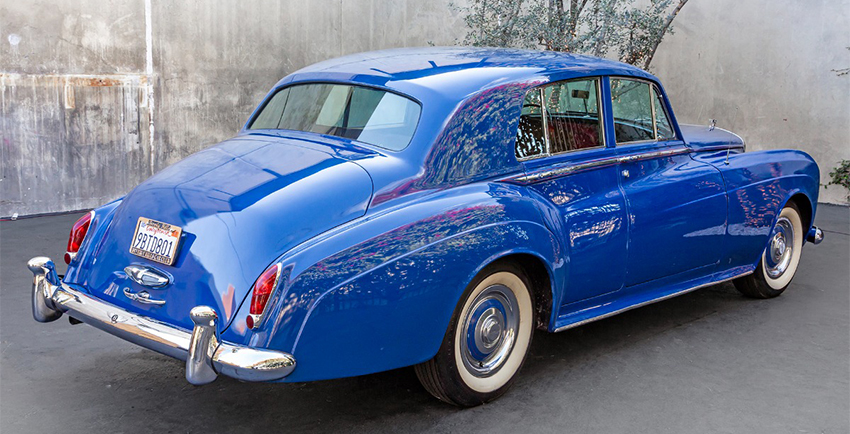
The radiator was lowered 1½ inches allowing a lower bonnet line, and other exterior differences included restyled front mudguards and smaller over-riders on the bumpers front and rear. The interior was modified with individual seats for front passengers and a rear seat moved two inches rearward for increased leg room. The 6.2 L (6230 cc/380 cu in) V8 engine continued with higher compression (9:1 instead of 8:1) and larger carburettors, increasing power output by 7%. The engine upgrades brought improved acceleration and a top speed of 115 mph with no loss of economy; for the American market an engine ‘breather’ was employed to reduce air pollution. The power steering was also improved.
The S3 was first announced and displayed at the Paris Motor Show in October 1962. The car was very similar to the preceding S2, with the most-visible exterior difference being a four-headlamp layout reflecting that introduced on the Rolls-Royce Silver Cloud III the same model year. The radiator was lowered 1½ inches allowing a lower bonnet line, and other exterior differences included restyled front mudguards and smaller over-riders on the bumpers front and rear. The interior was modified with individual seats for front passengers and a rear seat moved two inches rearward for increased leg room. The 6.2 L (6230 cc/380 cu in) V8 engine continued with higher compression (9:1 instead of 8:1) and larger carburettors, increasing power output by 7%. The engine upgrades brought improved acceleration and a top speed of 115 mph with no loss of economy; for the American market an engine ‘breather’ was employed to reduce air pollution. The power steering was also improved.
The interior of the Bentley S3 was a hallmark of traditional British luxury, featuring beautifully finished woodwork, Connolly leather upholstery, and Wilton carpets, only the best would do.
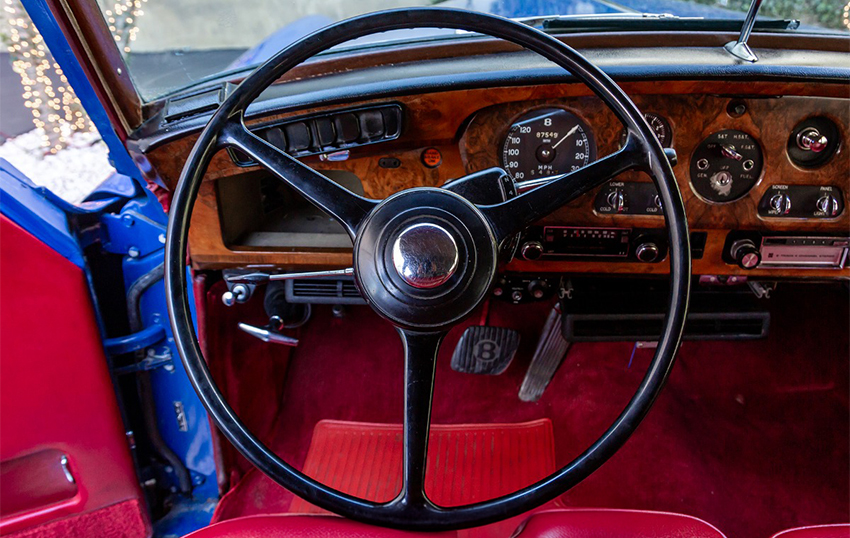
It was equipped with electric windows and air conditioning was available as an optional feature. The front seats were redesigned to provide more space and comfort, with a deeper seat squab and more leg room for passengers. Over 1,200 factory-built saloons were produced at Crewe, making it a very successful final chapter of the basic coachwork design that had originated over a decade before.
As before with the S1 and S2, the S3 was also offered in Continental form – the model that Keith Richards opted for – with a range of coachbuilt bodies offered to Bentley’s discerning clientele. The two major coachbuilding firms of H.J.Mulliner and Park Ward were by this time both owned by Rolls-Royce and the decision was taken to amalgamate the two companies, forming the new company known as Mulliner/Park Ward. Although the complete range of coachbuilt cars produced by Mulliner/Park Ward were badged as such, former H.J.Mulliner designs and Park Ward designs were continued and allowed to develop further on the S3 Continental chassis.
The success of the Vilhelm Koren-designed Bentley S2 Continental had pleased the powers that be at Park Ward and his design was adapted for the S3 Continental chassis, with the introduction of twin headlights.
The coachwork did not lend itself happily to horizontal headlights, so they were instead positioned on a slight slant. Vilhelm Koren originally designed both a fixed head coupe and a drophead coupe on the S2 Continental chassis, but the fixed head coupe was never produced. However, on the S3 Continental chassis, both designs were available, with both fixed head (Design No 2035) and drophead (Design No 2006) being produced in very similar numbers.
James Young who were still independently owned and not part of Rolls-Royce completed the options available, with a pair of beautiful fixed head coupes and eighteen very stylish sports saloons on the S3 Continental chassis.
The S3 marked the end of a major chapter for Bentley, representing the culmination of decades of classic postwar luxury motor car design. It was the last of the medium sized cars built to the traditional body on chassis method before Bentley transitioned to the more modern construction style with the introduction of the T Series. The S3 will probably be best remembered as the model that ushered in subtle modernizations like the introduction of twin headlights.
It was the end of an era, and what an era it had been.
-Alex Manos, Owner



Get Started!
Welcome!
join our inventory newsletter
Sign-up for our e-mail alerts
join our newsletter
Sign-up for our e-mail alerts
Learn More
or
we buy classic cars
Looking to sell yours?
Contact us
Sell us your car
Pick up from any USA location - Any condition - Top $$$ Paid


Chat With Us!