English
 Nederlands
 Français
 Deutsch
 Italiano
 Русский
 Español


Most great Italian sports cars carry the name of a company. A Bizzarrini carries the name of a man, who had already engineered the Ferrari 250 GTO before he ever built a car of his own. Giotto Bizzarrini left Maranello in the 1961 “Palace Revolt,” designed the V12 that launched Lamborghini, then partnered with Renzo Rivolta at Iso to create the Grifo.

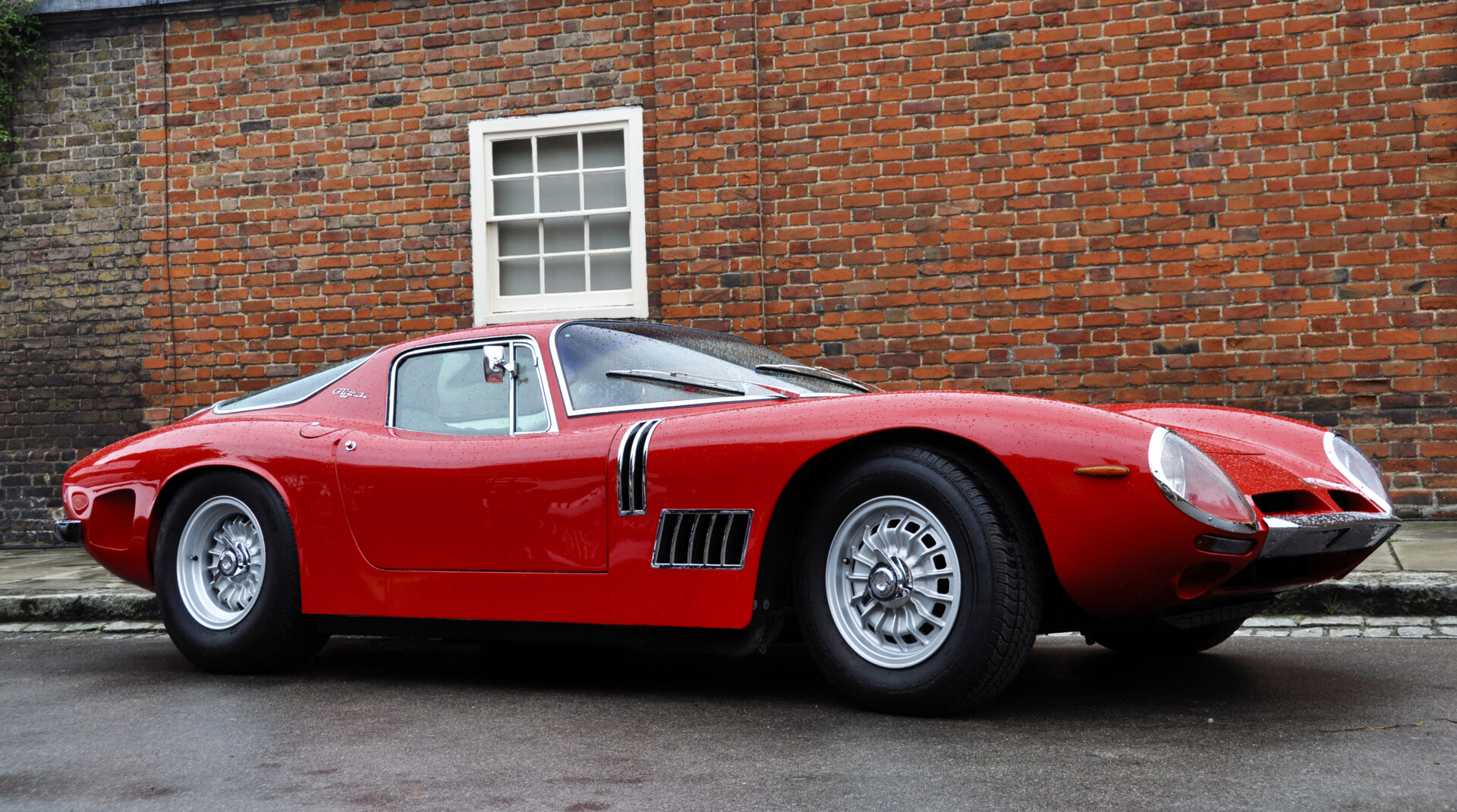
When that relationship fell apart in 1965, Bizzarrini kept the rights to the competition A3/C he had designed, set up shop in Livorno, and put his own name on the nose. What followed was a few short years of hand-built, Chevrolet-powered, riveted-aluminum gran turismos that were faster and rarer than almost anything Ferrari or Maserati was selling to the public. The company was gone by 1969.
That compressed history is exactly why owning one is special, and exactly why selling one takes more thought than selling a Ferrari or a Jaguar. There is no factory archive with tidy build sheets. Total production across every variant was small, and published counts disagree. And for decades, the combination of a simple tube-and-platform chassis and an off-the-shelf American V8 has made the Bizzarrini one of the most recreated shapes in the collector world.
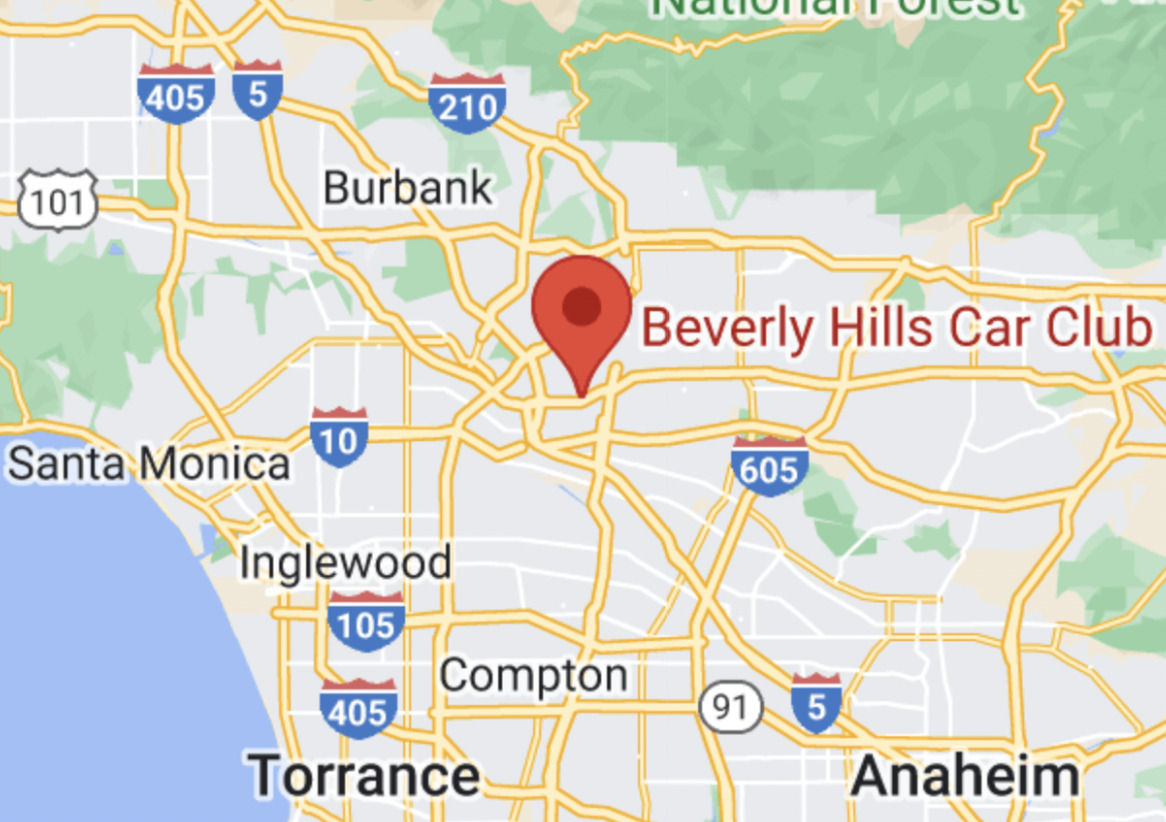
If you’re weighing how to sell yours, our team at Beverly Hills Car Club is a strong place to start. We buy Bizzarrinis directly — documented, undocumented, restored, or sitting in pieces!
From Iso Grifo A3/C to 1900 Europa: How the Family Tree Prices Out
The Bizzarrini story is compact, but the variants are distinct, and the market treats them very differently.
Iso Grifo A3/C 1963–1965
The origin point. Developed alongside the Bertone-bodied Grifo A3/L road car, the A3/C was Bizzarrini’s answer to the GTO: a low, front-mid-engined coupe with the Chevrolet V8 pushed far back behind the front axle and a riveted aluminum body over a fabricated steel platform. It raced at Le Mans in 1964 and returned in 1965 to finish ninth overall and win its class with no factory backing to speak of.
Bizzarrini 5300 GT Strada 1965–1968
The road car most people picture, and the core of the market. Mechanically it is essentially the A3/C under a new name, fitted with more road-going interior equipment and offered in alloy-bodied form for much of its run. Power comes from a Corvette-sourced 327 small-block in high-output tune, through a four-speed manual to a De Dion rear axle. Campagnolo wheels and correct period brake hardware matter to knowledgeable buyers.
5300 GT Corsa
The competition specification: lighter, more spartan, built to race. Many Bizzarrinis were ordered with a mix of Strada and Corsa parts, so “Corsa” claims call for documentation. A car with verified period racing history is valued on that history as much as on its condition.
5300 GT America 1966–1968
The fiberglass-bodied variant, largely aimed at the U.S. market, with an independent rear suspension in place of the De Dion. Production was very small. The America has historically traded below alloy Stradas, but the gap has narrowed sharply for well-documented, original, low-mileage cars.
Spyder & Targa Variants
A handful of open and targa-roofed cars were built on the 5300 chassis. These are individual cars with individual stories, and they’re valued one at a time.
1900 GT Europa 1966–1969
The “baby Bizzarrini.” Conceived around Opel 1900 running gear as a smaller, more affordable sibling to the 5300, it wears a fiberglass body that echoes the bigger car’s shape. Only a couple of dozen at most were completed before the company failed, and sources disagree on the exact count.
P538 & Continuation Cars
The mid-engined P538 was a 1966 Le Mans racer built in tiny numbers. Separately, the current owners of the Bizzarrini name began building 5300 GT Revival Corsa continuation cars in 2022. These are serious, expensive, well-built machines, but they’re a different category from period cars. If you own one, we’re glad to talk about it on its own terms.
Where Bizzarrinis Hide Their Issues
If you were standing next to your car with one of our buyers, this is roughly where we’d look and why. None of these issues ends the conversation.
Start under the car, at the frame. The Bizzarrini uses a fabricated steel platform with a boxed center section and tubular structures front and rear, with the body riveted or bonded on top. The center sills, the floor sections next to them, and the tubular front structure near the radiator and suspension pickups are where corrosion tends to settle, especially on cars that sat in damp storage. On alloy cars, also check where the aluminum meets the steel. Galvanic corrosion around rivet lines and body-to-frame seams is common, and it’s often hidden under paint until bubbling or lifting gives it away.
Next, the body. On alloy cars, look for dents, cracking around the rivets, and old repairs where panels were patched instead of re-formed. Correcting alloy coachwork properly requires specialist panel-beating, and the best restorations of these cars have taken thousands of labor hours. On fiberglass Americas and Europas, look for stress cracking, especially around door openings, hinge areas, and mounting points, plus any sign that the body’s bond to the chassis has been disturbed. These cars have no bumpers, so nose and tail damage is common. Repair quality varies a lot.
Open the hood. Here the Bizzarrini has a real advantage over its Italian rivals. A Chevrolet small-block is far simpler and far less costly to rebuild than an Italian V12, and parts are everywhere. Correctness matters more than mechanical health. A period-correct Corvette engine with appropriate casting and date codes, the right induction setup, and documentation tying it to the car is worth meaningfully more than a generic small-block that runs just as well. If the original engine was replaced decades ago and the original has been lost, that’s common in this world.
Sit inside on a warm day. These cars run hot. The set-back engine sits close to the footwells, insulation was minimal, and cooling systems were marginal in traffic when the cars were new. Owners often find upgraded radiators, electric fans, and added heat shielding. Sensible, reversible cooling improvements are generally viewed favorably. Overheating history, warped heads, or cracked exhaust components?
Look closely at the details. Windscreens, original instruments, grilles, vent trims, badges, and light assemblies are the hardest parts of a Bizzarrini to source. A complete car with its original small parts is far easier to value and sell than one where those parts have been fabricated or substituted. If you have a box of original parts, even broken ones, keep it with the car. It matters.
Finally, modifications. Larger-displacement small-blocks, five-speed conversions, air conditioning, and modern ignition are common on cars that were driven hard. Reversible changes with the original components kept usually affect value modestly. Irreversible changes to the structure or body are a bigger deal.
How the Three Ways to Sell Actually Pay Out
Every channel has a place. What matters is the money you actually keep and the time it takes to get it, not the headline number.
Auction. Major houses give a Bizzarrini a beautiful catalog, international exposure, and a room full of qualified bidders, and the right car on the right day can do very well. The costs are real, though. Seller’s commissions typically run around 10% of the hammer price, and sometimes higher. Add transport to the venue, consignment storage, and insurance, and expect the process to take months. The Bizzarrini auction record also includes a fair number of cars that crossed the block and went home unsold because bidding stalled below reserve, often when buyers had unanswered questions about history. A no-sale costs time and money and returns nothing.
Private sale. Selling privately gives you full control and a direct relationship with the next owner. It also means a very small buyer pool, often spread across continents. Expect long email exchanges about chassis numbers, requests for third-party inspections, international payment and shipping logistics, and offers that depend on financing or on sorting out paperwork. The right private buyer exists. Finding and closing with them takes patience.
Direct sale to Beverly Hills Car Club. You trade the chance of a perfect-day auction result for a certain outcome. If an offer is made and agreed to, you receive a specific number based on current market data and your car’s actual condition and history, without commissions or consignment fees. Payment is immediate, and we coordinate pickup around your schedule. Top dollar paid and immediate transactions is what we aim for every time.
When you’re ready
Send our team:
Clear photos of the exterior from all angles, the interior, the engine bay, the underside if you can reach it, and any damage or corrosion. A close-up of the chassis stamping, plus any engine numbers you can read.
Ownership context: how long you’ve had the car, how it’s been stored, major work done, and any documentation, registry correspondence, or restoration records
We review everything and respond within 24 hours, often sooner. If an offer is made and agreed to, payment follows immediately and we handle the logistics from there.
No pressure and no deadlines. When you’re ready to move forward, we’re here!

Call Now 888-848-4771
Email [email protected]
Recent Testimonials:

Dennis M.
1969 Mercedes-Benz 280SL
April 29, 2021
“I sold a classic 1969 Mercedes to Alex on March 16, 2021. The entire process of offer, counter offer and acceptance was quick and comfortable for me. I provided many (66) on-line pictures for his perusal which may have expedited the process. I included a picture of every defect I could visually locate. Along with his acceptance of my counter offer, he provided me with detailed information of what he was providing and what was required of me. He mailed me a cashier’s check (my choice) for the purchase price by next-day FedEx. He allowed for my choice of pick up date for the car in order to give me time to ensure his check to me was clear. That was reassuring and comforting to me and a big deal to me. His team kept me apprised every step of the way. His employees were superb and I was happy with the entire transaction.”
Budd Y.
1947 MG TC
April 28, 2021
“This was a very smooth and expeditious transaction. Alex was very professional and to the point on the purchase. It had been a difficult decision for me the let my classic go. I am hopeful it has found a new and loving owner. I have already endorsed Alex to another car owner.”
Linda Z.
1972 Volvo P1800E
April 27, 2021
“Working with honest professional makes all the difference in the world.”
Salvatore V.
1963 Jaguar XKE Roadster
April 25, 2021
“Smooth and very professional transaction. Highly recommend!”
Philippe G.
1960 Austin-Healey 3000 BT7 Convertible Sports Car
April 24, 2021
“Five stars !”
John B.
1964 Triumph TR3
April 23, 2021
“Alex and his staff were excellent. They promptly sent a cashiers check for the agreed upon purchase price of my Triumph. They arranged transportation to pick up the car that worked with my schedule. I really appreciate that he is saving a car that deserves a second life.”
Peter F.
1992 Porsche 964 Cabriolet
April 21, 2021
“Alex was great to work with – friendly, professional, quick responses. I highly recommend him.”
Next Steps?
Call Now
Or email via our website and we’ll go over all you need to know to sell your classic!
Send Photos
Just send a few photos, this is often all we need to make an offer.
Get Paid!
You get you paid, and then we’ll pick up the vehicle – IT’S THAT SIMPLE!

Get Started!
Welcome!
join our inventory newsletter
Sign-up for our e-mail alerts
join our newsletter
Sign-up for our e-mail alerts
Learn More
or
we buy classic cars
Looking to sell yours?
Contact us
Sell us your car
Pick up from any USA location - Any condition - Top $$$ Paid


Chat With Us!