English
 Nederlands
 Français
 Deutsch
 Italiano
 Русский
 Español


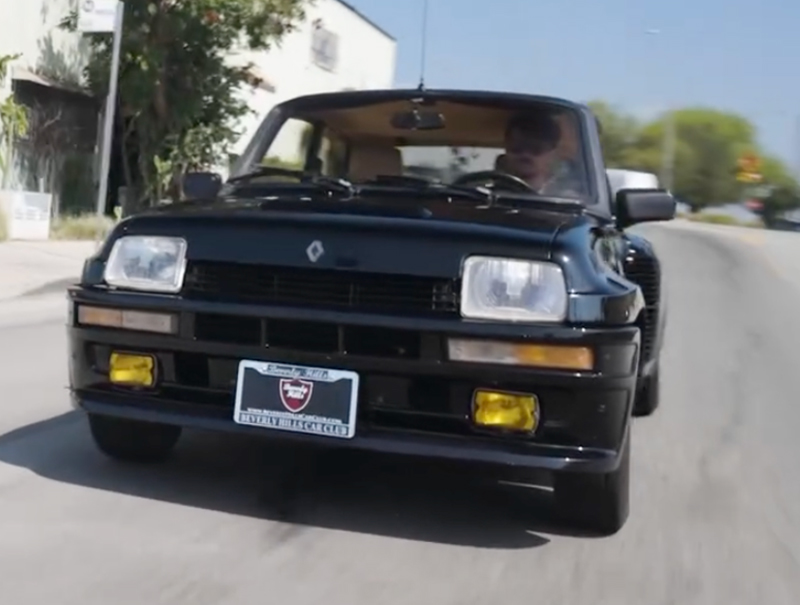
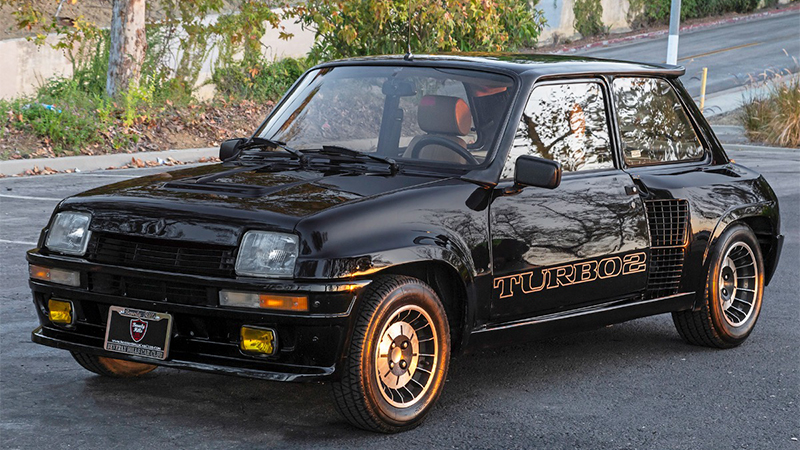
Every great homologation special starts with a rulebook, and the Renault 5 Turbo started with a loophole big enough to drive a rally car through. To compete in the FIA’s Group 4 category, a manufacturer had to build 400 road-going examples. Renault’s answer was audacious: take the 5, the cheerful front-drive supermini that French families used for grocery runs, delete the rear seat, and bolt a turbocharged engine where the children used to sit. Then give it rear-wheel drive, a track nearly as wide as it was tall, and fender flares that look like they were inflated with a bicycle pump.
Renault 5 Turbo Buyer
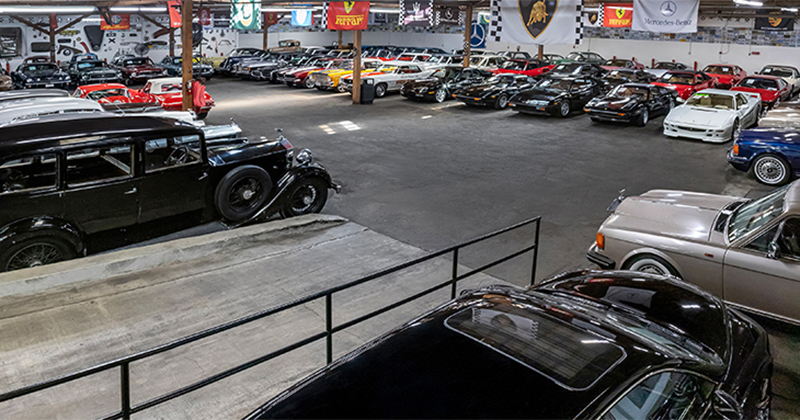
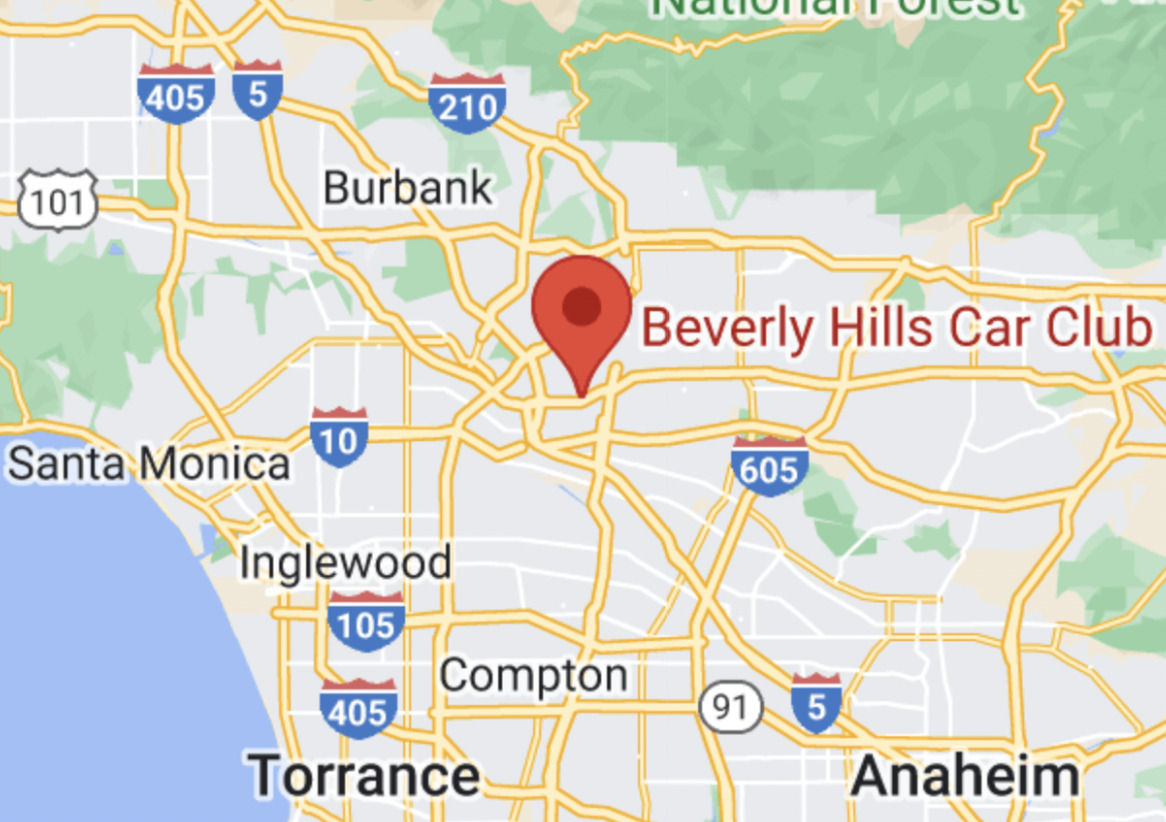
Beverly Hills Car Club Classic Cars Dealership
Common is relative. These were working trucks in snow states, sold to people who used them, and the attrition over fifty years has been brutal. What survives in solid, unmolested condition is a much smaller population than the production run suggests. Own one and you’re thinking about selling?
The result still wears the 5’s windshield, door handles, and basic silhouette. Everything underneath tells a different story. When Jean Ragnotti won the 1981 Monte Carlo Rally in one, the little Renault stopped being a curiosity and became a legend. Four decades later, with Renault preparing to launch an electric tribute to the original, the R5 Turbo has never had a higher profile.
If you own one, you know it’s an unusual car to sell, especially in the United States, where Renault never officially offered it. The pool of qualified American buyers is small, the specialist network sits mostly in France, and paperwork on imported cars can be anything but simple. That’s where our team comes in.
Beverly Hills Car Club buys Renault 5 Turbos directly. If an offer is made and agreed to, we provide immediate payment and handle the logistics: pickup, title work, import documentation questions, and whatever else your specific situation requires. You’re evaluating options; for most sellers, a direct sale is the best one. We’ll explain why below, and we’ll be honest about when another path might serve you better.
Project 822: How a Shopping Car Became a Mid-Engine Weapon
The idea took shape at Renault in 1976, championed by production executive Jean Terramorsi under the internal designation Project 822. A prototype appeared at the 1978 Paris Motor Show, and series production began in 1980.
The build process itself tells you how far this car sits from an ordinary 5. Bare body shells came off the regular Renault line and traveled to coachbuilder Heuliez, which reworked the structure, widened it substantially, and fitted unique panels. Final assembly happened at the Alpine factory in Dieppe, alongside the A310.
The mechanical package: A 1,397cc pushrod four-cylinder, derived from the engine in the 5 Alpine (sold in Britain as the Gordini), fitted with a Garrett turbocharger, an intercooler, and Bosch K-Jetronic mechanical fuel injection. Output was rated at 160 horsepower in road trim. Power reached the rear wheels through a five-speed transaxle, with double-wishbone suspension front and rear and disc brakes at all four corners. In a car weighing under a ton, that combination was ferocious for its era, and it remains genuinely entertaining today.
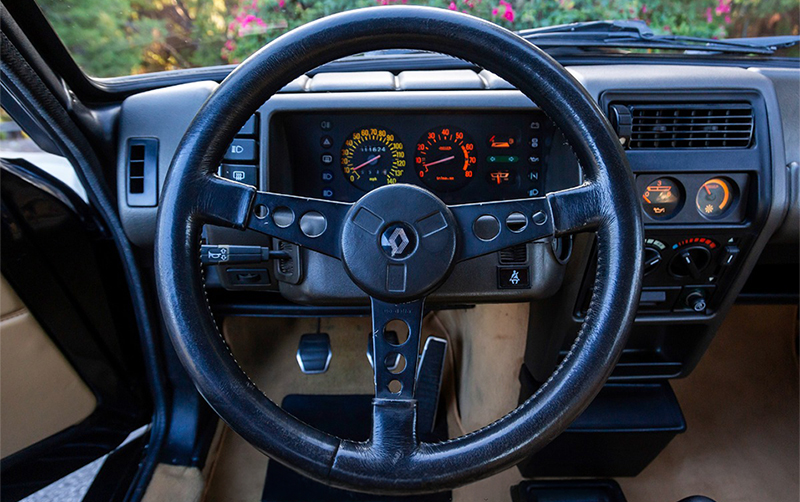
Turbo 1 (1980–1982): The original and the purest expression. Roof, doors, and tailgate were aluminum. The interior was bespoke, with a dramatic dashboard and seats designed by Marcello Gandini at Bertone, typically trimmed in bold red or blue to match the exterior. These are the cars serious collectors pursue first, and they consistently command a meaningful premium over the later version.
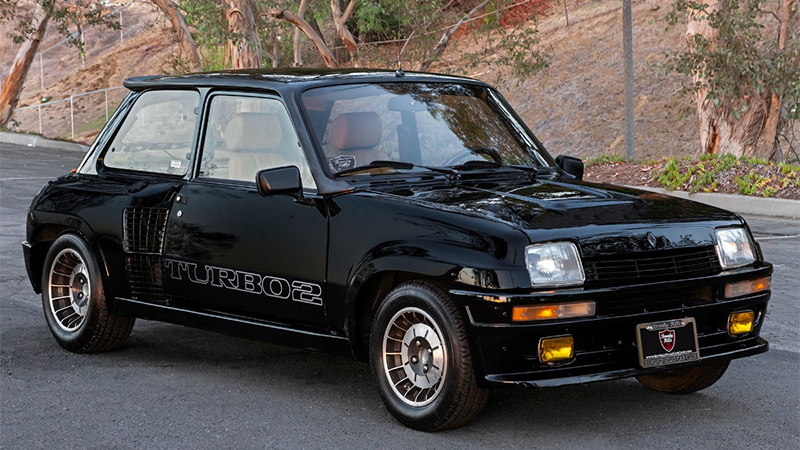
Turbo 2 (1983–1986): Introduced at the 1982 Geneva show, the Turbo 2 was Renault’s way of meeting continued demand at a lower build cost. The aluminum panels gave way to steel, and the bespoke interior was replaced with trim drawn largely from the 5 Alpine Turbo. Mechanically, the cars are close cousins, with the same engine rating and the same essential driving character. The Turbo 2 is the more common car and the one most American owners hold, and it has appreciated strongly in its own right.
Competition derivatives: Renault also built evolution and competition versions, including the Tour de Corse, Cévennes, and the Group B Maxi 5 Turbo, which won the 1985 Tour de Corse. These are a separate market with separate authentication standards. If you believe you own one, documentation and chassis verification become the entire conversation.
A Buyer Who Knows What a Dieppe Car Is Worth
Alex Manos has been a serious collector since 2004, and his business grew from there by doing one thing consistently: telling sellers the truth about their cars. Today our team buys nationwide, across the 48 continental states and Hawaii, and our track record spans thousands of makes, models, and conditions, from European homologation specials to American muscle to barn finds that hadn’t moved in decades.
That track record includes the complications that stall ordinary transactions: estates with executors who’ve never handled a collector car, divorces requiring a neutral assessment, storage facilities holding liens, and titles that have bounced between states or countries. Imported European cars bring their own layer of paperwork, and we’ve worked through it many times.
The Chassis Plate Comes First:
Because the R5 Turbo was built in limited numbers and looks so distinctive, it has attracted more than its share of conversions and replicas. That reality shapes how the market prices every car.
Replicas built on standard 5 shells. Body kits that mimic the Turbo’s flares have existed since the 1980s, some installed on front-engined, front-drive cars. A genuine mid-engine car is unmistakable once you look underneath, but photographs and listings can blur the distinction. Genuine cars carry chassis numbers reflecting the 822 project designation, and that number is the foundation of everything else.
Turbo 2s presented as Turbo 1s. Because the original commands a premium, some Turbo 2s have been fitted with aluminum panels or Bertone-style interiors. These cars can be lovely, but the market prices them by what the chassis says, not by what the cabin looks like.
Originality and correct specification. Factory colors, the correct interior for the series, original wheels, and an unmodified structure all carry weight. The market increasingly rewards preservation and penalizes period “improvements” that seemed sensible when these were just fast used cars.
Documentation that matters most: Original French registration documents (the carte grise) or other European registration history, service records from Renault or recognized specialists, any factory or Alpine production confirmation, and, for cars in the U.S., the complete import file. A car with a clean chain from its first European owner to its current American title occupies a different market position than one with gaps.
An import question. Because the R5 Turbo was never federalized, most U.S. examples arrived either as grey-market imports in the 1980s or under the 25-year exemption in more recent years. How the car entered the country, and whether the entry paperwork survives, affects how easily the next owner can register it. California adds its own considerations for vehicles of this era that never received U.S. emissions certification. None of this disqualifies a car, but it does factor into its value, and we know how to work through it.
Walk Around Your Car With Us
If you’re preparing to sell, here’s how we look at an R5 Turbo. Every item below affects price; none of them is automatically a deal-breaker.
Start underneath, at the floor. The R5 Turbo began as a steel unit-body economy car, and it rusts like one. Check the floor pans, particularly around and beneath the seats, the sills, the jacking points, and the front inner wings. Look at the area around the windshield base and scuttle, where water collects and goes unnoticed for years.
Then look behind the seats. The bulkhead separating the cabin from the engine lives a hard life: heat cycles from a turbocharged engine inches away, plus condensation and old fluid leaks. Corrosion here is structural, and repairing it properly takes specialist metalwork.
Lift the flares, figuratively. Those famous wide wings are composite, so they won’t rust, but they can hide the steel inner structure behind them. Rot in the rear wheel arches and the mounting areas for the rear suspension often goes unseen until someone looks closely. On Turbo 2s, check door bottoms and the tailgate, which are steel. On Turbo 1s, check for corrosion where the aluminum panels meet steel; that galvanic reaction is slow but persistent.
Assume the engine bay has been cooked. A mid-mounted turbo in a tightly packaged bay means decades of heat soak. Hoses, wiring insulation, vacuum lines, and rubber components degrade faster than on a front-engined car. Brittle wiring is common and worth noting honestly.
Ask how it starts after sitting. K-Jetronic mechanical injection is robust when maintained but dislikes long storage. Fuel distributors, warm-up regulators, and injectors frequently need attention on cars that have been parked. A car that starts hot but struggles cold, or vice versa, is usually telling you about its injection system.
Listen to the turbo. Smoke on boost, excessive shaft play, or a wastegate that’s been tampered with all point toward a turbocharger rebuild. A full engine and turbo overhaul done by a qualified specialist, with European-sourced parts, represents a substantial portion of a Turbo 2’s value. That’s precisely why documented engine work adds so much confidence.
Work through the gears. The transaxle is durable, but the long linkage running from the cabin to the rear of the car wears and gets vague, and synchros tire with hard use. A gearbox rebuild is a significant but known expense; a sloppy linkage is usually a far smaller one.
Inventory the unique parts. Turbo 1 aluminum panels, Bertone interior components, specific trim, and original wheels are scarce. A car that’s complete is worth meaningfully more than one that needs these sourced, because some of them simply aren’t easy to find at any price.
Plenty of R5 Turbos have lived exciting lives. Many were rallied, club-raced, or tuned by owners who wanted more than 160 horsepower. Engine upgrades, larger turbos, revised suspension, competition seats, and roll cages all turn up.
We evaluate these cars individually. Documented period competition history with a well-known team or driver can add genuine interest. Reversible upgrades with original components retained hurt value far less than irreversible changes. Heavily modified cars with no originals and no history face a narrower market, and we price them for the market they’ll actually find. In every case, we’ll explain our reasoning.
Sending Us Your Car’s Story
When you’re ready to move forward, send us clear photos of the exterior from every angle, the interior, the engine bay, the underside if you can access it, and any rust or damage. Include the chassis number, along with whatever history you have: how long you’ve owned it, how it came into the country, how it’s been stored, what work has been done, and what documents you hold.
We respond within 24–48 hours, and often sooner. If we make an offer, it’s a specific number with clear reasoning — not a range, and not a figure that changes once we see the car. If an offer is made and agreed to, payment follows immediately and we coordinate pickup around your schedule.

Call Now 888-848-4771
Email [email protected]
Recent Testimonials:

Mike M.
1983 Ferrari 308GTS Quattrovalvole
January 3, 2021
“Adam was very responsive. Thanks!”

Joe L.
1971 Jaguar XKE V12 2+2
January 2, 2021
“Easy selling my XKE Jaguar! They do it right”

Robert L.
1949 Jaguar Mark V Saloon
January 1, 2021
“My husband found Alex through the Jaguar antique auto association and was given several names. However, my husband felt Alex was the most professional. We were selling a 1949 jaguar that had been in my family for over 60 years. Alex was easy to work with. we negotiated the price once that was settled Alex had deposited the money in my account even before they had obtained the car. His team was awesome. One person, I communicated with to get all the documents to her & the other made all the arrangements for transportation for the vehicle. It couldn’t have gone any smoother. We have another vehicle in our family that because of our experience with Alex, we are even more motivated to sell it and definitely through Alex.”

Andrew S.
1988 Porsche Carrera Cabriolet
December 28, 2020
“Alex was as professional as you can get, quick and trust worthy with no BS or used car talk. It was as simple as I will buy the car for this much and within an hour a cashiers check and a tow truck was there with all paper work. Seamless.”

Chris B.
1972 Alfa Romeo GTV 2000
December 24, 2020
“Phenomenal, found exactly what I was looking for. Helped thru the process from start to finish. I am very pleased with my Alfa Romeo.”

Sal N.
1966 Chevrolet Malibu Convertible
December 22, 2020
“Super nice, responded quickly in a timely manner and was honest. Everything you want in a car buying experience.”
Fritz S.
1965 Mercedes-Benz 230SL
December 21, 2020
“Was terrific. Would recommend BHCC and Oliver to everyone.”
Next Steps?
Call Now
Or email via our website and we’ll go over all you need to know to sell your classic!
Send Photos
Just send a few photos, this is often all we need to make an offer.
Get Paid!
You get you paid, and then we’ll pick up the vehicle – IT’S THAT SIMPLE!
Get Started!
Welcome!
join our inventory newsletter
Sign-up for our e-mail alerts
join our newsletter
Sign-up for our e-mail alerts
Learn More
or
we buy classic cars
Looking to sell yours?
Contact us
Sell us your car
Pick up from any USA location - Any condition - Top $$$ Paid


Chat With Us!