 English
 Nederlands
 Français
 Deutsch
 Italiano
 Русский
 Español


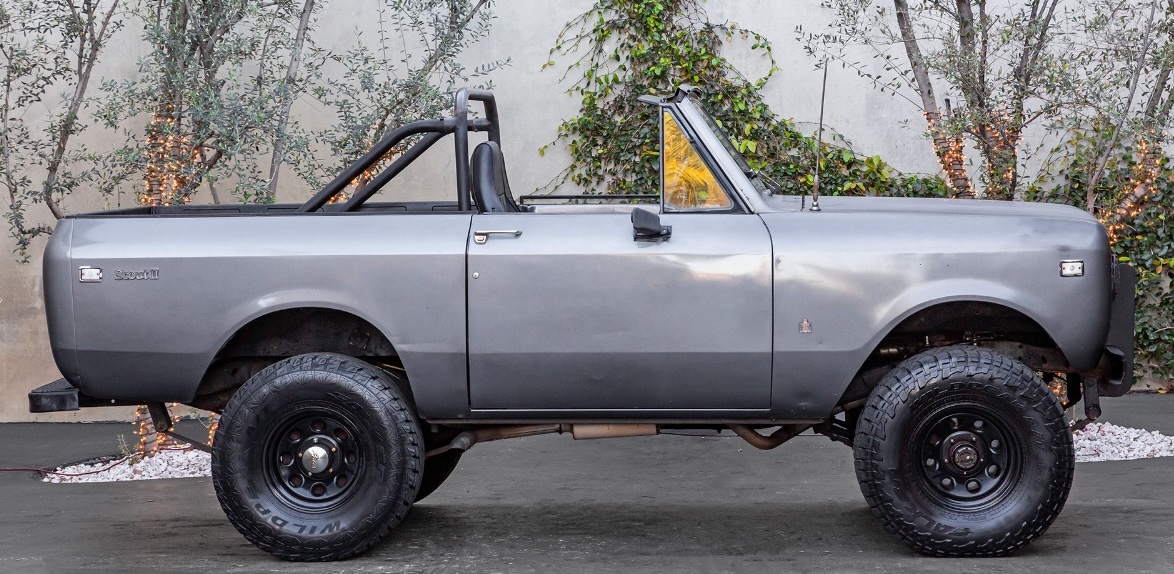
Something changed for Scout owners over the last decade, and most of them found out the same way: the truck that nobody wanted for thirty years started attracting phone calls. Some of those calls are from people who genuinely want the truck. Some are from builders looking for a cheap core. Some are from flippers who want to buy it Saturday and list it Sunday. And some are from tire-kickers who read that Scouts are hot now and want to know if you’d take a third of that.

Selling an International Scout: A Look at Your Options
Beverly Hills Car Club Classic Cars Dealership – we buy nationwide and sell nationally & internationally
If you own one — a Scout 80 that’s been on the property since your father bought it new, a Scout II that plowed a driveway for twenty winters, a Terra somebody started and stopped restoring — the hard part is no longer finding a buyer. It’s working out which of the people talking to you is serious, and what the truck is actually worth to someone who knows what they’re looking at.
Who You’re Dealing With
Alex Manos began buying collector vehicles in Los Angeles in 2004, starting with British sports cars and growing — largely on referrals from sellers who liked how the transaction went — into a nationwide operation. Our team buys throughout the 48 continental states and Hawaii, across thousands of makes, models, and condition levels, and across the situations that come attached to them: estates, divorces, storage liens, out-of-state titles, and vehicles whose registration expired several decades ago.
Three commitments, stated plainly. We don’t renegotiate after agreement — the number we shake on is the number that gets paid, with no revision when the transport driver reports back. We don’t send lowball offers designed to create pressure. And we don’t waste your time: if your Scout isn’t right for us, we’ll say so directly and point you somewhere better rather than keeping you on the hook.
The Rust Questions Sellers Actually Ask Us
“Is rust going to kill the deal?” Almost never. Scouts rust — all of them, in patterns consistent enough that we can usually predict what your photos will show before we open them. We price around corrosion rather than treating it as disqualifying. What kills deals is discovering it late, which is why we’d rather you photograph the bad spots than hide them.
“Where are you going to look first?” The lower rear tub corners where the quarter panel meets the wheel arch, and the tailgate, which rots from the inner seam outward. Then rockers and lower door skins. Then the body mounts where the tub sits on the frame, which corrode quietly and get patched badly. Then floors — front footwells and the rear cargo area, particularly under any carpet or bedliner that’s been holding moisture against the metal. Then front fender bottoms, inner fenders, and the battery tray. On a Scout II we finish at the lower corners of the windshield frame, where the glass gasket traps water; it’s the spot sellers most often forget to photograph.
“What’s the difference between rust that costs me a little and rust that costs me a lot?” Location. Surface scale on panels is a normal, manageable line item. Structural corrosion in the frame rails, the rear crossmember, the spring hangers, and the body mounts is a different category, and comprehensive metalwork done properly can cost a large multiple of what a finished driver-quality Scout brings. That’s not a reason to walk away from a truck. It’s the reason honest pricing matters more on a Scout than on almost anything else we buy.
“Mine’s been sitting outside since the nineties. Are you still interested?” Usually, yes. Send photos.
Mechanical Realities We Price Around, Not Away
The International V8s — the 304, 345, and 392 — are durable and agricultural, with a known habit list that includes cracked exhaust manifolds and cooling systems that need to be right rather than adequate. The slant fours are close to unkillable and unhurried. The Nissan SD33 and SD33T diesels are excellent when maintained and expensive when they aren’t; injection pump work is specialist territory. Fifty-year-old wiring has generally been amended by someone along the way. Power steering boxes weep. Any truck that sat for years needs the entire brake system gone through.
None of that surprises us. Rebuild costs on these drivetrains are well understood, and we build needed work into the offer rather than pretending the truck is something it isn’t.
Modifications deserve their own note, because a large share of surviving Scouts have been lifted, re-geared, swapped, or built into something. That market is real. A professionally executed build with correct fabrication and receipts can carry strong value. A parts-store lift stack, a half-finished swap with the original components long gone, or a cut-up body brings less than an unmolested original. We take each truck on its own facts — and if the original parts are still on a shelf in the garage, say so, because it almost always helps.
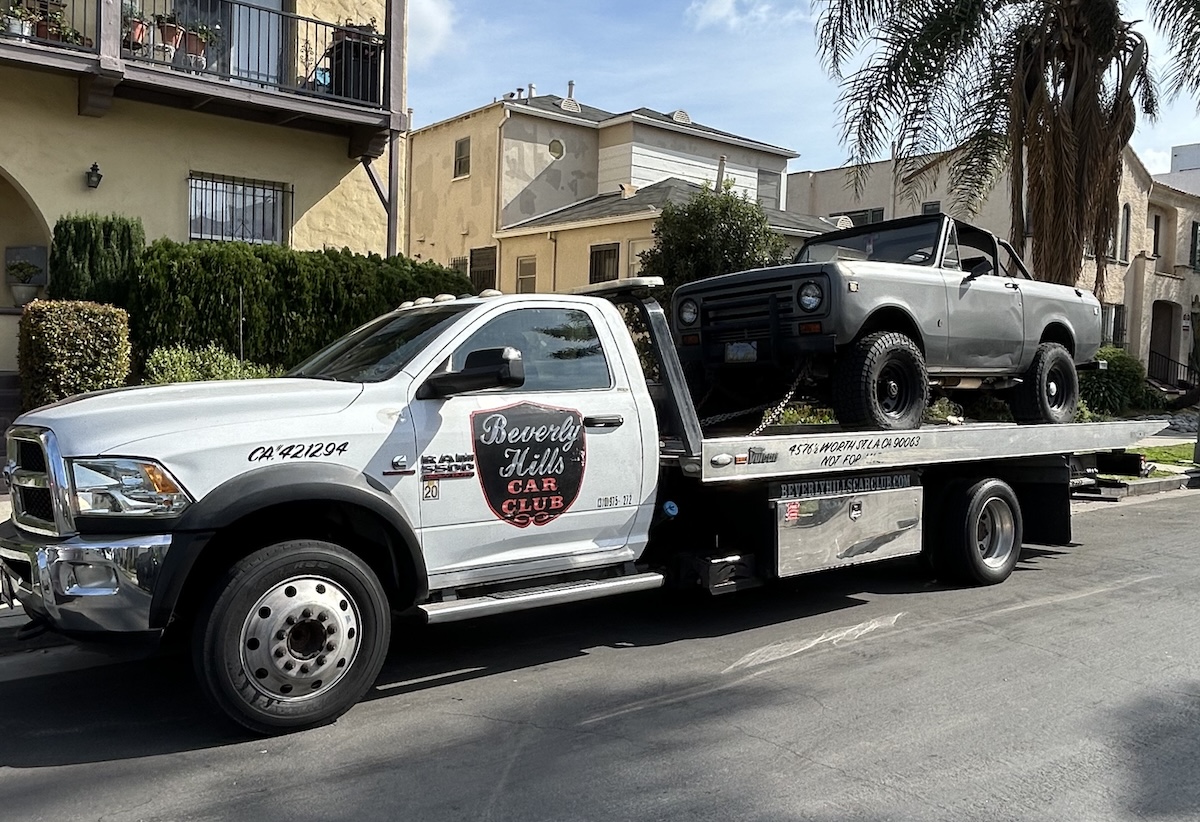
Four Ways to Sell a Scout, and What Each One Really Costs You
The major auctions. Real upside for the right truck — a correct SSII or a documented early 80 in front of the right room can do very well. The arithmetic to hold in mind: seller’s commission typically runs about ten percent and climbs on premium consignments, transport and insurance to the venue come out of your pocket, storage during consignment accrues, and the timeline from agreement to hammer generally runs a few months. If bidding stalls under reserve, you’ve spent all of that and still own the truck.
Online enthusiast auctions. Excellent exposure to exactly the right audience, and Scouts have performed well on these platforms. In exchange you take on the work: photographing to a standard, writing the description, answering questions in the comments daily for a week, and disclosing everything accurately — which is the correct standard, but it’s a real time commitment. Fees are lower than a live sale, and the audience is knowledgeable enough that condition problems get found and discussed publicly.
Private sale. Full control, full price-setting, and direct conversations with people who care about the truck. Also a large volume of unserious inquiries, no-shows, offers well under asking, and contingencies on inspection or financing. It works. It typically takes two to three months of your attention, and considerably longer for a project.
Selling directly to us. Certainty rather than possibility. You send information, we respond, and if an offer is made and agreed to, you have a specific number with immediate payment, no commission off the top, no listing to write, no reserve to sweat, and transport arranged around your schedule instead of an auction calendar. Top dollar paid and immediate transactions, with the fee structure and the waiting removed from the equation.
We won’t claim our number matches what a perfect truck might bring at a strong sale on a good night. We’ll claim it’s fair against the current market and your truck’s actual condition, that it arrives fast, and that it doesn’t change afterward. For most sellers, netted out against fees and months of effort, that’s the better real-world outcome. For a seller with a genuinely exceptional Scout, patience, and an appetite for the process, an auction may serve better — and we’ll say so if that’s what your truck calls for.
What to Send and What Happens Next
Photographs, taken honestly and in daylight — a phone is fine. All four exterior angles, interior, engine bay, the rear tub corners and rockers, the floors and frame from underneath if you can safely get there, and close-ups of every rust or damage area you know about. Photograph the problems. We’re going to find them regardless, and sellers who show them upfront get a firmer number faster.
With that, send the VIN, the drivetrain configuration if you know it, and the ownership context: how long you’ve had it, how it’s been stored, what work has been done, what you know is wrong, and any paperwork you have — Line Setting Ticket, receipts, old registrations, restoration photographs.
We review and respond within 24 to 48 hours, often sooner. If we’re making an offer, it’s a specific number with the reasoning behind it: not a range, not subject to a later inspection, not something that moves when the trailer shows up. If we’re not the right buyer for your Scout, we’ll explain why and suggest where to look.
When you’re ready to move forward, get in touch. There’s no urgency on our end and there shouldn’t be any on yours — International Harvester stopped building these in 1980, and yours has already waited longer than most.
Call Now 888-848-4771
Email [email protected]
Recent Testimonials:
Guillermo R.
1987 Porsche 911 Carrera Targa
March 1, 2026
“The Best! I had my baby toy Porsche 911 carrera Targa 1987 for almost 40 years since i was in my 20’s. Never wanted to sell it because you get so attached to something that gave you so many good times and memories of almost a lifetime. It becomes part of your life. But it was becoming very time consuming to take good care of it. For years i thought of selling it but i was afraid of all the sharks out there that made me feel scared of letting my dear car go into the wrong person. Being that i felt that my dear Porscha was part of me, i wouldn’t let go. Until recently that i had the curiosity of exploring exotic car dealers and i found Alex. NO PRESSURE, NO HARRASMENT. I found the RIGHT HOME for that part of me. It was so hard to let it go but i know it is in the best hands it can be. I hope some day i can get it back. ALEX MANOS and ALL HIS STAFF ARE THE BEST!!! I hope to get pictures and to keep posted on my baby’s whereabouts. IT WAS NOT ONLY ABOUT MONEY, he was very human and made my pain easier to cope with. Thank you Alex!”

Stevens R.
1980 Alfa Romeo Spider Veloce
February 28, 2026
“Still early in the process. Following receipt of vehicle l will provide my complete review. Thus far He ok has provided nothing short of outstanding service.”

Lois Z.
1964 Mercedes-Benz 230SL
February 28, 2026
“The entire transaction went smoothly and professionally.I would highly recommend Alex Manos.”

Kevin C.
1989 Ferrari Mondial T Cabriolet
February 24, 2026
“Alpha was very helpful when I called. He did everything I needed and looked up information for me.”

Ben M.
1971 Mercedes-Benz 280SL
February 23, 2026
“This was my first experience with Alex, but I can tell you it wont be my last. He was so polite and professional to work with. From the beginning to the end everything went super smooth. He is a man of his word. He and his team kept me up to date along the entire process. The 1971 280SL was picked up in a timely manner and went super smooth. I am super happy with everything.”
Timothee D.
1985 Rolls-Royce Corniche
February 22, 2026
“I’m looking forward to talking to Gevik again. He told the truth upfront and that’s always a plus with me.”
Dan J.
1972 Porsche 911 Cabriolet Conversion
February 19, 2026
“I would say keep up the good work, and a shout out to the crew.”


Next Steps?
Call Now
Or email via our website and we’ll go over all you need to know to sell your classic!
Send Photos
Just send a few photos, this is often all we need to make an offer.
Get Paid!
You get you paid, and then we’ll pick up the vehicle – IT’S THAT SIMPLE!

Get Started!
Welcome!
join our inventory newsletter
Sign-up for our e-mail alerts
join our newsletter
Sign-up for our e-mail alerts
Learn More
or
we buy classic cars
Looking to sell yours?
Contact us
Sell us your car
Pick up from any USA location - Any condition - Top $$$ Paid


Chat With Us!