 English
 Nederlands
 Français
 Deutsch
 Italiano
 Русский
 Español


Beverly Hills Car Club – we buy classic cars nationwide

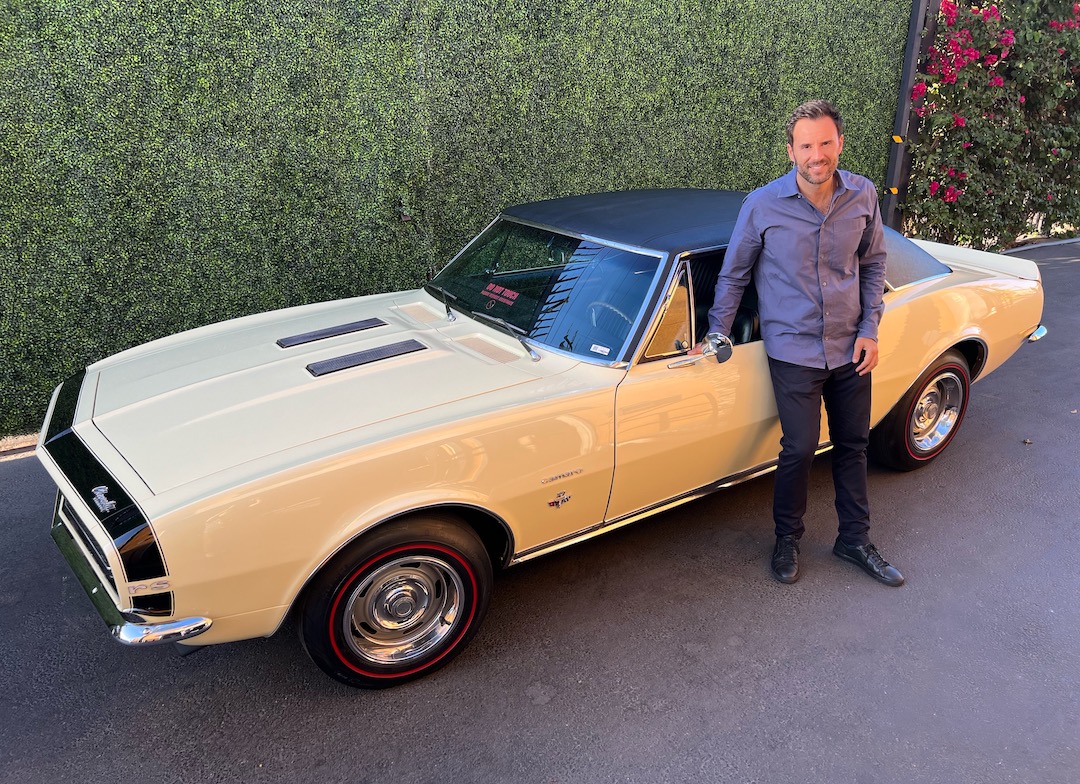
1967 Chevrolet Camaro Buyer, The One Year That Can't Borrow Parts
There’s a practical reason 1967 Camaros get treated differently from the two years that followed, and it has little to do with nostalgia. A 1967 car is full of things that were only used in 1967. The grille. The taillight lenses. The instrument panel. Much of the interior trim. The door glass, because 1967 was the only first generation year with vent windows. The clean flanks, because side marker lights didn’t arrive until federal rules required them for 1968. Most of it was gone by the time the next model year came down the line.
For an owner, that cuts two ways at once. It’s why first-year cars hold a particular place with collectors who want the design exactly as Chevrolet’s stylists drew it, before regulation started adding to it. It’s also why a 1967 that’s missing correct trim, or that’s been patched with later parts by someone who didn’t know or didn’t care, is a harder car to put right than a 1968 or 1969 in similar condition.
Who You’re Dealing With
We buy 1967 Camaros in every version of that story – cars kept correctly for decades, cars built into something else in the 1980s, and cars that came out of a barn last month with a mouse nest where the air cleaner should be. This page covers what we look at when we assess one, and how selling directly compares with the other routes you’re weighing. For most owners, a direct sale with a firm number and immediate payment is the strongest of those routes
What Was Offered in Year One?
The 1967 Camaro arrived in a market Ford had owned for two and a half years, and Chevrolet’s answer was choice. The base car carried a 230 inline six. From there the order sheet climbed through the 250 six, the 327 small block, and — notably — the SS 350, which gave Chevrolet’s 350-cubic-inch V8 its public debut. The Camaro was the first car to get it. The 396 big block followed partway into the model year, so the earliest-built 1967s couldn’t have had one from the factory, a timing detail that matters when a car’s build date and its drivetrain story need to line up.
A handful of first-year specifics we check on every car:
The 1967 Z/28 wore no Z/28 badges. The dual stripes over the hood and deck lid were the only exterior giveaway. Owners are sometimes surprised to learn that a correctly presented first-year Z/28 shouldn’t carry emblems, and that a car wearing them is telling you something about how it was restored. The package required a four-speed manual and power front disc brakes, and first-year production was a small fraction of what 1968 and 1969 would bring. This is the scarce one, and it’s the one most often imitated.
The rear suspension was a work in progress. Most 1967 cars rode on single-leaf rear springs, and the high-performance cars added a traction bar to fight axle wind-up. The multi-leaf springs and staggered rear shocks that addressed the problem properly came for 1968. Anyone who has launched a 1967 big-block four-speed hard knows the wheel hop firsthand — and a correct first-year car should still have the first-year hardware, not a later upgrade.
Front disc brakes were optional. A four-wheel-drum 1967 is correct, not deficient. If a car has been converted to discs, the original parts being present, or not, becomes part of its value story.
The Rally Sport package brought the vacuum-operated hidden headlights, which are charming when they work and a genuine sorting project when they don’t. We see plenty of RS cars with the doors wired open, the actuators dead, or the vacuum lines replaced with whatever was on hand. It’s fixable, and it’s priced into the number rather than counted against the car.
Convertibles are a much smaller slice of 1967 production than coupes, and a documented first-year SS or RS/SS convertible sits in its own part of the market.
- Chevrolet Camaro First Generation
- Chevrolet Camaro First Generation hardtop
- Chevy Camaro First Generation convertible
- Chevrolet Camaro First Generation RS
- Chevrolet Camaro First Generation SS
- Chevrolet Camaro First Generation Z/28
- 1967 Chevrolet Camaro
- 1968 Chevrolet Camaro
- 1969 Chevrolet Camaro
- 1967 Chevrolet Camaro hardtop
- 1968 Chevrolet Camaro hardtop
- 1969 Chevrolet Camaro hardtop
- 1967 Chevrolet Camaro convertible
- 1968 Chevrolet Camaro convertible
- 1969 Chevrolet Camaro convertible
- 1967 Chevrolet Camaro RS
- 1968 Chevrolet Camaro RS
- 1969 Chevrolet Camaro RS
- 1967 Chevrolet Camaro SS
- 1968 Chevrolet Camaro SS
- 1969 Chevrolet Camaro SS
- 1967 Chevrolet Camaro Z/28
- 1968 Chevrolet Camaro Z/28
- 1969 Chevrolet Camaro Z/28
A Walk Around Your Car
If we were standing in your garage, this is the route we’d follow. You can walk it yourself before sending photos, and doing so makes our assessment faster and more accurate.
Start under the hood, at the cowl. Look at the plenum area at the base of the windshield. This is the Camaro’s most expensive quiet problem: leaves and water collect there, the metal corrodes from the inside where it can’t be seen, and the water finds its way into the toe boards, kick panels, and inner rockers. A driver’s-side carpet that’s been damp more than once is usually a cowl problem, not a windshield seal.
Then the floors, from below if you can. Toe boards first, then the full pan, then the inner and outer rockers. Press along the rockers with a thumb or a screwdriver handle – it tells the truth faster than a photograph does.
The front subframe at its body mounts. The bolt-on subframe is what let Chevrolet fit everything from a six to a big block, and the points where it meets the body are a known corrosion spot. Look at the mounts, not only along the rails.
The rear frame rails where they arch over the axle. Structural, common, and easy to miss.
The trunk, with the mat all the way out. The floor, the drop-off panels at the rear corners, the tail panel corners. Then check the channel under the rear window from inside — cars that wore vinyl tops are the usual offenders, and rot there spreads into the package shelf.
Lower quarters ahead of and behind the wheel openings, and the wheelhouses. Then the door bottoms. On a 1967 specifically, look at the vent window seals and frames: worn seals let water run down inside the door, and that’s a moisture path the later cars don’t have.
Finish with the mechanical side, and relax a little here. A tired small block, a slipping Powerglide, a whining rear axle — these are routine on a Camaro, and parts supply is effectively bottomless. Drivetrain work on these cars sits at the modest end of anything in the classic market. Costs climb in specific places: a solid-lifter 302 needing correct heads and valvetrain, a big-block rebuild where the original block must be saved rather than swapped, and hunting down factory equipment a previous owner discarded decades ago that now matters to judging and value.
Us vs. the Alternatives: What Actually Reaches Your Account
The comparison that matters is between realized outcomes, not best-case headlines.
Auction puts your car in front of the widest audience, and for a documented 1967 Z/28 or a correct SS with provenance, that exposure is genuinely valuable. The costs are also real, and most are owed whatever the result: a seller’s commission commonly around ten percent, transport to the venue, insurance and storage through consignment, and a timeline that typically runs a few months from paperwork to payment. If bidding stalls below your reserve, those costs are spent and the car comes home.
Private sale carries the highest theoretical ceiling and the heaviest effort. With a 1967 especially, you’ll be walking every knowledgeable prospect through the authentication question, at length, repeatedly, and sometimes with people more confident than informed. Add the inquiries that lead nowhere, the viewings that don’t happen, inspection contingencies, and financing that may not come through. Some owners enjoy the process. Many start it and finish it with us.
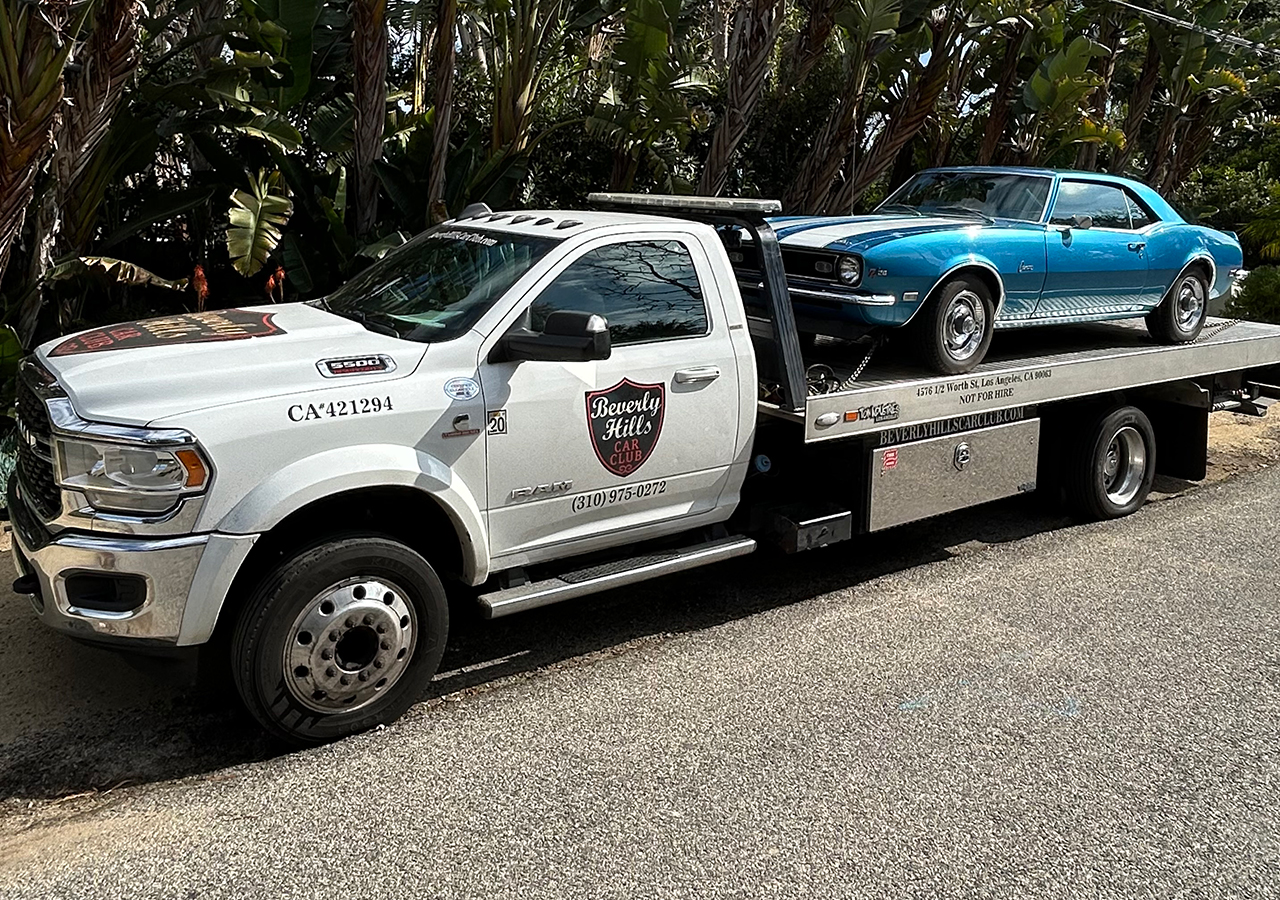
Selling to us exchanges the theoretical ceiling for a known result. You send information, we assess the car, and if an offer is made and agreed to, you receive a specific number — not a range, and not contingent on a later inspection rewriting the terms. Payment is immediate. We arrange pickup anywhere in the country and handle the paperwork, including the versions complicated by liens, missing titles, out-of-state registration, or estate documentation.
What to Send and What Happens Next
Send clear photos: all four corners, the interior, the engine bay, the trunk with the mat lifted, and the underside if you can reach it safely. Include a readable shot of the cowl tag and, if accessible, the stamped pad on the front of the engine block. Add the VIN, how long you’ve owned the car, what’s been done to it, and what you know is wrong. Honest photos of the rough areas help us more than flattering photos of the good ones — they let us get the number right the first time.
Call Now 888-848-4771
Email [email protected]
Recent Testimonials:

Roger A.
1998 Porsche 993 C2S
October 1, 2020
“Oliver was very professional and quite knowledgeable about Porsches.”
Lynford D.
1961 Jaguar XKE Right-Hand Drive Flat Floor Fixed Head Coupe
October 1, 2020
“Kind thoughtful and courteous with the entire transaction. Follow through completely in every detail. Completely stood by their end of the bargain 100% without a question. I would recommend dealing with Alex in any automotive transaction without a question.”
Wolfgang L.
1961 Mercedes-Benz 190SL
October 1, 2020
“After my on-line request for a quote Alex Manos contacted me pretty quick on phone. The price he offered was not exactly what I was looking for but I think it was a fair price and I’m happy to have the deal closed with Alex. The title transfer process was done very professional, the payment was made as quick as promised and the pick up of my car flowed perfectly. In summary the whole transaction was done professionally with no stress or additional cost for me.”
Brock M.
1990 Bentley Turbo R
October 1, 2020
“Very pleasant experience to sell a car, very prompt with payment and pick up of the car. Look forward to doing business again in the future.”
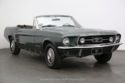
Mark C.
1967 Ford Mustang Convertible C-Code
September 30, 2020
“Fantastic service, still currently working with him.”
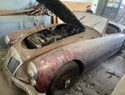
Dean A.
1956 MG A Roadster Right Hand Drive
September 30, 2020
“From the original email to the final loading of the car as it was leaving, everything was smooth and effortless. We always got quick responses to any questions and everyone was always very friendly and professional. As sad as I was to see my little MGA go, it was time for it to find a new home and I think it did with Alex Manos!!!”
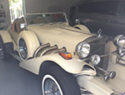
Wayne D.
1979 Excalibur SS Roadster
September 29, 2020
“I was amazed the ratings were accurate. The transaction was simple and Alex was a pleasure to deal with. The price I got for my car was excellent and If you value your time it is worth a 5 minute phone call to save you a lot of time and energy.”

Next Steps?
Call Now
Or email via our website and we’ll go over all you need to know to sell your classic!
Send Photos
Just send a few photos, this is often all we need to make an offer.
Get Paid!
You get you paid, and then we’ll pick up the vehicle – IT’S THAT SIMPLE!

Get Started!
Welcome!
join our inventory newsletter
Sign-up for our e-mail alerts
join our newsletter
Sign-up for our e-mail alerts
Learn More
or
we buy classic cars
Looking to sell yours?
Contact us
Sell us your car
Pick up from any USA location - Any condition - Top $$$ Paid


Chat With Us!