 English
 Nederlands
 Français
 Deutsch
 Italiano
 Русский
 Español

There’s a particular kind of credibility that accrues to a car in its fifth year of production. The 190SL that rolled out of Stuttgart in 1959 wasn’t being introduced to anyone. Automotive press had filed its verdicts. Owners had put real miles on the platform. A secondary market for used examples was already functioning. By 1959, the W121 had done something that separates enduring classics from period novelties: it had convinced people who’d actually lived with one to want another.
Search Inventory
 0
0
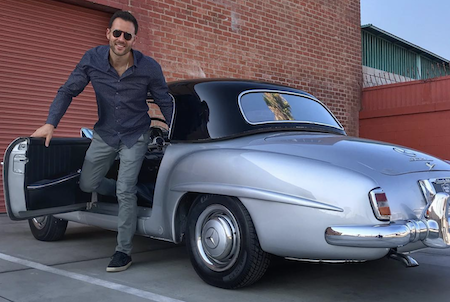
1959 MERCEDES-BENZ 190SL, SELLING THAT CLASSIC

The buyers who chose a new 190SL in 1959 were, by and large, informed buyers. They understood what the car was — a genuine two-seat roadster with Stuttgart engineering behind it, not a dressed-up economy car wearing sports car clothes — and they chose it deliberately. The cars that survived from that year reflect that ownership culture. They were driven, maintained, and in many cases genuinely cared for across decades. The ones reaching the market now carry that history, and the collector community for W121s has grown precise enough to value it accurately.
Call Beverly Hills Car Club: 310-975-0272
What that means practically: a 1959 190SL is neither penalized for being mid-production nor rewarded simply for being early. It earns its value the straightforward way — on the basis of what it is, what condition it’s in, and what documentation supports it. For sellers, that’s a clarifying frame. The variables that matter are the ones you can actually speak to.
1959 in the W121 Timeline — And Why Buyers Care
Mercedes-Benz made no significant mechanical revision to the 190SL for 1959. The M121 engine held its 1,897cc displacement and single-overhead-cam architecture. The twin Solex 44 PHH carburetors remained the induction system. The four-speed manual gearbox — synchromesh on second, third, and fourth, deliberate technique required for first — was unchanged. Double-wishbone front suspension, coil-sprung rear swing axle, unit-body construction: all consistent with the platform as established.
What 1959 represents in the production arc is a car the factory had fully sorted. Early production variables had been resolved years prior. The cars being built in 1959 came off the line with the kind of consistency that only sustained production delivers. For buyers who understand the W121 timeline, the 1955 and 1956 cars carry an early-production premium for their low chassis numbers and provenance. The 1959 cars — and those through the early 1960s — carry something different: the confidence of a proven, mature platform with no unknowns remaining.
The roadster-versus-coupe dynamic is unchanged from earlier production years. Roadsters command the premium — typically 20–30% over comparable coupes — because they’re what the market pictures when it pictures a 190SL. Coupe buyers exist and they’re not obscure; they’re simply a narrower audience seeking a different proposition. A 1959 coupe in strong condition with original specification reaches its buyers reliably, just usually at a lower price point than its open-top equivalent.
The factory hardtop, when present and documented as belonging to the car, adds value over a roadster without one. The distinction the market draws is between a hardtop with provenance connecting it to the specific chassis and one sourced separately — the former commands a premium the latter does not fully replicate.
Matching numbers on the engine and gearbox remain the single most important binary in W121 valuation. A 1959 roadster with verifiable matching components occupies a meaningfully different tier than one with correct-specification replacements, regardless of how well those replacements were sourced or installed. That gap doesn’t close based on presentation alone. Collector-grade buyers wait for matching numbers when they want them.
Original factory color and interior specification have become increasingly significant as the W121 market has matured. A 1959 190SL documented in its original color combination, cross-referenced against factory records, presents differently to serious buyers than one repainted in a color that wasn’t on the original build sheet. The gap between those two cars has widened as the market has grown more sophisticated, and it continues to widen.
I’ve been buying significant classics since 2004 — starting in Los Angeles with British and European sports cars and building a team that now works with sellers across 48 continental states and Hawaii. The 190SL has been part of that buying continuously, across every condition grade the W121 produces. What I’ve found, consistently, is that sellers who understand their car’s condition before they start talking to buyers navigate the process better than those who discover it mid-transaction.
Complicated Situations Are the Norm, Not the Exception
Cars of this age rarely arrive with simple paperwork and straightforward circumstances. The complications that surround a 1959 190SL sale are worth naming plainly, because the buyer who can navigate them is a different resource than one who can’t.
Estate sales involving a W121 typically combine unfamiliarity with the asset, time pressure from beneficiaries or courts, and documentation that may be scattered across decades of ownership. Executors and estate attorneys deal with vintage vehicle transactions infrequently enough that each one feels novel. I work with estate situations regularly — I know what documentation is needed, how to help locate it when it’s incomplete, and how to operate on a probate timeline whether that means moving in days or waiting months.
Divorce circumstances require clean resolution: a single market-based valuation both parties can accept, immediate payment, and a transaction that ends rather than continues. Storage liens on facilities where a 1959 190SL has been sitting for years, titles in other states or other names, and registrations lapsed long ago are situations that stop most buyers before they start. When the car is worth the effort of resolution, they don’t stop me.
Incomplete restorations and disassembled projects are worth a direct conversation regardless of how far from finished they appear. What I need to know is what’s present and what the completed work is worth — from there I can tell you honestly what I can offer and why. If I can’t make a number work, I’ll say that directly rather than stringing the conversation out.
Why Beverly Hills Car Club?
The auction ceiling for a strong 1959 190SL is genuine. A first-quality matching-numbers roadster with documentation and correct original specification, placed at the right house with the right bidders present, can produce results that exceed any other channel. That ceiling is real.
The floor beneath it is also real. A car that hammers at $XXX at a major house nets $XXX minus the seller’s premium and transport — a result that arrives two to four months after consignment, assuming the car sells at its first appearance. A no-sale means starting again having spent both. Private listing reaches engaged buyers and gives you control over the process; it also means absorbing an extended timeline of inquiries, viewings, and contingent offers from buyers who may not complete.
A direct offer from Beverly Hills Car Club converts all of that into a specific number within 24–48 hours, immediate payment if a deal is reached, and a transaction that concludes in days. Top dollar paid and immediate transactions — not the ceiling of a perfect auction result, but a fair market outcome that arrives without the overhead. For sellers who’ve decided the time is right, that’s usually the better trade.
Send What You Have
Photos of the car as it is — exterior from all angles, interior, engine bay, trunk, undercarriage if accessible, any problem areas, hardtop if present. The chassis number. Whatever documentation you have… We’ll respond within 24–48 hours with a specific number if I’m making an offer, or a direct explanation if I’m not. If an offer is made and agreed to, payment wires promptly and everything else gets handled without requiring you to manage it.
Ready to Sell Your 1959 Mercedes-Benz 190SL?
Send photos and basic information about your car to [email protected] or call us directly at 310-975-0272. We’ll respond within 24–48 hours.
Mercedes-Benz 190SL Series
- Selling Your Mercedes-Benz 190SL
- Selling Your 1955 Mercedes-Benz 190SL
- Selling Your 1956 Mercedes-Benz 190SL
- Selling Your 1957 Mercedes-Benz 190SL
- Selling Your 1958 Mercedes-Benz 190SL
- Selling Your 1960 Mercedes-Benz 190SL
- Selling Your 1961 Mercedes-Benz 190SL
- Selling Your 1962 Mercedes-Benz 190SL
- Selling Your 1963 Mercedes-Benz 190SL
Why Choose Beverly Hills Car Club?
Beverly Hills Car Club has been a trusted name in classic car buying since 2004. We offer fair market valuations, immediate payment, and free nationwide pickup. Whether your 1959 190SL is a pristine matching-numbers survivor, a driver-quality roadster, or a project awaiting completion, we have the expertise to assess it accurately and make a genuine offer. No hidden fees, no manufactured delays — just a clean, professional transaction on your timeline.
Keith H.
1989 Mercedes-Benz 560SL
December 23, 2021
“I went to Alex because other people rated him highly in the selling of thier classic car. I sold my 1989 Mercedes Benz 560SL to him at a fair price and he had it picked up in less then a week. This was a great experience all around from the first email to a direct phone call with him to selling and pickup. If you want to have instant results go to them first and talk with Alex Manos.”
John L.
1971 Mercedes-Benz 280SL
December 21, 2021
“Gevik was very helpful and worked quickly to help me get the car inspected. Although I did not end up purchasing the car, I would definitely work with Gevik and Beverly Hills Car Club again.”
Jack R.
1968 Mercedes 280SL
December 19, 2021
“Thank you to Mr. Manos, and his entire staff, for making the sale process of my car so easy… All I had to do was sign the required documents and return them in the provided envelope. The team members arranged the transport of the car quickly, and at my convenience…”
Jack M.
1965 Mercedes 230SL
December 11, 2021
“Recently sold Alex a 1965 Mercedes. Alex was very professional and the purchase went flawlessly. I described the car to Alex and sent him pictures and the next day Alex wired the funds to my account. Great experience. Thanks Again!”
Byron S.
1964 Mercedes-Benz 230SL
November 13, 2021
“I had a ’64 MBZ 230 SL that needed a new home. I found Alex Mano’s website, read it, filled out the short form, uploaded 5 pictures, and waited. About 5 minutes later Alex called and after a short discussion, he sent out a trusted employee with a flatbed who took additional pictures, sent them to Alex and after we reviewed them and settled on a price, I got paid, the car got loaded on the flatbed and off it went. It was a very smooth transaction, the entire process was quick, and I feel very good about the entire process. I’d do it again!”
Annie W.
1968 Mercedes-Benz 280SL
October 29, 2021
“At first I was apprehensive about doing transactions via online because of so much fraud on the internet. I must say I am very impressed with the professionalism displayed by Alex and his staff. The entire process was seamless. Alex and his staff guided the process via phone and email with step by step instructions. When Alex said he will pay top dollar for an automobile; he will do just that. I am beyond satisfied with the services provided by Alex!! I wish I had another car to sell.”

Stanley M.
1963 Mercedes-Benz 230SL
October 13, 2021
“I contacted Alex to see about selling my project car. He was very professional and easy to work with. The whole experience was very good and handled very well.”

Adrian R.
1962 Mercedes-Benz 220SE Cabriolet
October 7, 2021
“Gevik was very helpful. He has a pleasant manor and responds to emails without delay.”
Stan L.
1989 Mercedes-Benz
September 19, 2021
“I contacted Alex because my cherished Mercedes had fallen into disrepair when I lost my income due to the Covid panic. I had owned it for more than 20 years and had enjoyed driving it, but I could no longer afford to keep it in good shape. It still looked new, but I knew that the longer it sat undriven the more it would deteriorate so I knew it was time to sell. Alex offered me a fair price for it and the transaction was smooth. Everything was handled professionally and quickly. I hope someone else can enjoy the car as I have.”

Next Steps?
Call Now
Or email via our website and we’ll go over all you need to know to sell your classic!
Send Photos
Just send a few photos, this is often all we need to make an offer!
Get Paid!
We pay via wire transfer promptly upon agreement. Fast and easy!

Get Started!
Welcome!
join our inventory newsletter
Sign-up for our e-mail alerts
join our newsletter
Sign-up for our e-mail alerts
Learn More
or
we buy classic cars
Looking to sell yours?
Contact us
Sell us your car
Pick up from any USA location - Any condition - Top $$$ Paid


Chat With Us!