 English
 Nederlands
 Français
 Deutsch
 Italiano
 Русский
 Español


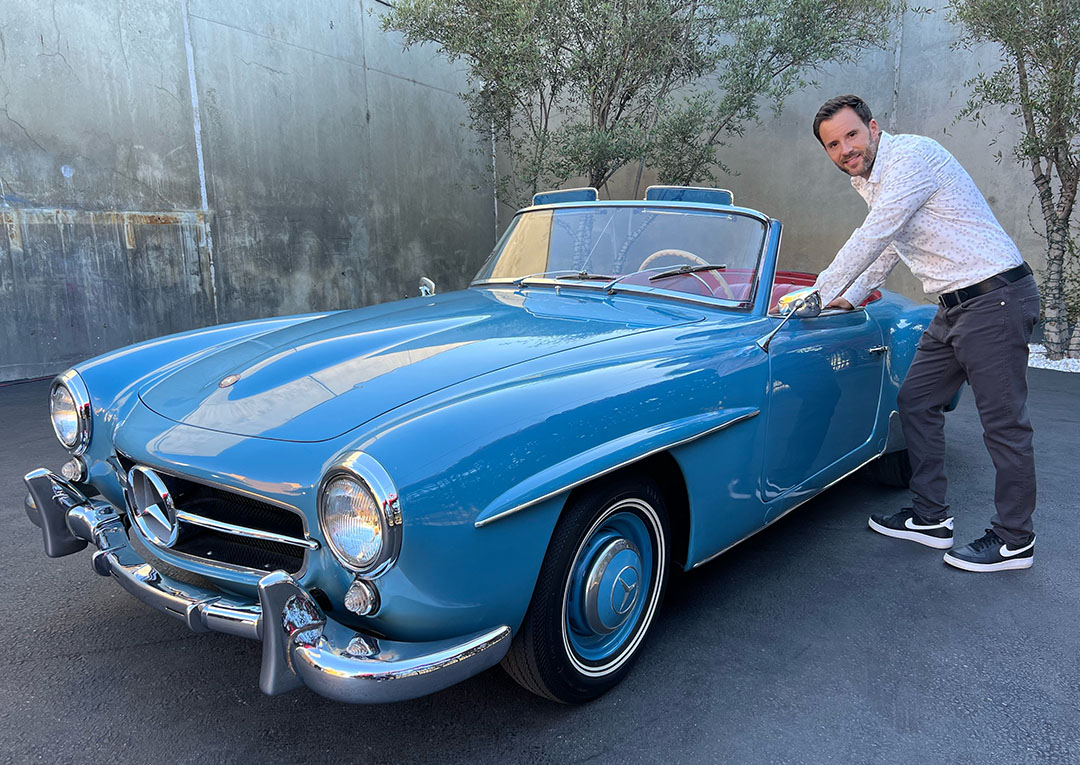
By 1960, the 190SL had completed a quiet cultural migration. It had arrived in 1955 as a product launch — a Stuttgart roadster positioned to broaden the appeal of the 300SL’s moment without diluting it. Five years later it was something else: a fixture. You saw them on the Côte d’Azur, in the driveways of professionals who’d done well enough to reward themselves properly, in American showrooms where the postwar appetite for European sports cars had matured into something more discerning than novelty-seeking. The 190SL in 1960 was a car that people with good taste and real money chose deliberately.
WHO BUYS 1960 MERCEDES-BENZ 190SL? WE DO!

The cars that survived from 1960 carry that origin. They were bought by people who knew what they were doing, maintained by people who cared about them, and passed through histories that are often more coherent and traceable than those of earlier examples that changed hands more frequently in the enthusiast community. For sellers today, that provenance — wherever it’s present — is among the most valuable things the car carries.
Call Beverly Hills Car Club: 310-975-0272
What a Serious Buyer Is Thinking When They Look at a 1960 190SL
The W121 platform in 1960 is the same platform Mercedes-Benz had been refining since 1955. The M121 engine — 1,897cc, single overhead camshaft, twin Solex 44 PHH carburetors — is unchanged in specification. The four-speed manual gearbox, double-wishbone front suspension, coil-sprung rear swing axle, and unit-body construction are all as established. A buyer who knows 190SLs doesn’t approach a 1960 example looking for year-specific changes. They approach it looking for something more fundamental: whether this particular car is what it’s represented to be, in the condition it appears to be, with the history that’s claimed for it.
That’s the evaluative frame worth understanding before any selling decision gets made.
The first question is always configuration. Roadster or coupe — and if roadster, does the original factory hardtop accompany it. The roadster is the car the market reaches for instinctively, and it commands a premium over the coupe that’s consistent across condition grades. Coupes find their buyers, but from a narrower audience with different priorities. A roadster retaining a documented factory hardtop — provenance connecting the two clearly established — presents as a more complete car than one where the hardtop has been separated or sourced independently. Buyers who follow W121s ask about the hardtop specifically and read the answer carefully.
The second question is matching numbers. The engine block and gearbox need to carry numbers verifiable against the car’s chassis documentation. A 1960 190SL with confirmed matching components occupies a different tier of the market than one with correct-specification replacements, regardless of the quality of those replacements. This isn’t a sentimental preference among collectors — it’s a structural feature of how the market prices these cars. Non-matching examples find buyers in the driver-quality segment; collector-grade buyers wait for matching numbers.
The third question is originality of specification. Factory color, verified against build records. Interior specification matching the original configuration. Options present and correct. The W121 market has grown precise enough that deviations from factory specification — a repaint in an off-catalog color, a non-original interior, modifications to the body — are now priced rather than overlooked. A 1960 190SL in documented original specification presents to a serious buyer as a fundamentally different car than one that’s been altered, regardless of how tastefully.
The fourth question is documentation. Original Kraftfahrzeugbrief or clean U.S. title. Service records spanning the car’s history. Restoration documentation with photographs, receipts, and a coherent narrative of what was done and when. An ownership history that accounts for where the car has been. Documentation doesn’t just tell a story — it converts a buyer’s impression of a car into confidence, and confidence translates directly into what they’ll pay and how quickly they’ll commit.
The fifth question, always, is condition. And condition on a W121 starts in one place.
The Condition Conversation — Seen Through a Buyer’s Eyes
A serious buyer examining a 1960 190SL approaches condition systematically, and the system starts with structure. Unit-body construction means the steel body carries the loads — there’s no separate frame to absorb the stresses that floor pans and sills take on every time the car is driven. These elements rust. On a 190SL, the locations that a knowledgeable buyer examines first are the inner and outer sills, floor pans and footwells, the battery tray area behind the right front wheel, trunk floor, lower door bottoms, and the windscreen frame surrounds.
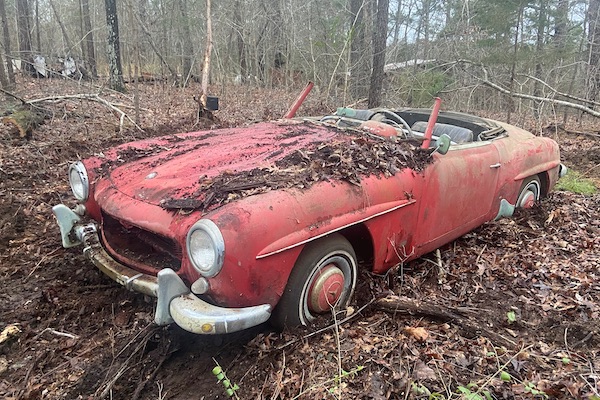
What a buyer is distinguishing between is surface corrosion — often visually alarming but structurally minor — and compromised structure, which is expensive to address properly and sometimes concealed behind cosmetic work applied during a prior refresh. Fresh undercoating on a car with no documented restoration history prompts questions, not confidence. A car with solid, verifiable structure and honest surface patina often presents better to a sophisticated buyer than one with fresh paint over an uncertain substrate.
Documented metalwork already completed is a genuine value asset. A seller who can show what was done, when, by whom, and with photographic evidence of the process before and during is presenting a materially different car than one where the same work was done but left undocumented. The work matters; the documentation of it matters nearly as much.
From structure, a buyer moves to the carburetors. The twin Solex 44 PHH units are the M121’s defining mechanical characteristic and its most maintenance-sensitive element. A car that runs cleanly — stable idle, smooth progression off idle, consistent behavior at cruise — tells a buyer the carburetors have been properly maintained or recently rebuilt. A car that stumbles, hunts, or pulls raises questions that extend beyond the carburetors themselves, because buyers who aren’t specialists often can’t distinguish a carburetor problem from a more fundamental one. A 190SL with recently serviced carburetors, documented and described, removes that uncertainty entirely.
Engine and gearbox condition read next. Oil consumption, compression, smoke on startup, gearbox behavior through the range — these are the mechanical signals buyers who know W121s look for. A tired engine isn’t a reason to avoid a direct sale, but it’s a reason to be honest about what the next owner faces. A drivetrain with documented recent work tells the opposite story, and buyers respond to it accordingly.
Modifications get evaluated individually rather than categorically. A five-speed conversion with the original gearbox retained, documented, and accompanying the car is meaningfully different from one where the original unit is permanently gone. Sympathetic mechanical improvements — reversible, documented, with original components preserved — typically cost nothing in collectibility. Significant departures from factory specification narrow the buyer pool in ways presentation alone doesn’t recover. The question a buyer asks about any modification is whether it was done thoughtfully and reversibly, or definitively and without documentation.
Soft top condition and interior specification factor into a buyer’s overall impression without reaching the magnitude of structural and mechanical concerns. A correct, well-fitted top reads as evidence of care. An incorrect or deteriorated one reads as evidence of deferred attention. Interior condition follows the same logic — it’s a signal about how the car was maintained, not just how it looks.
Let’s Talk About Your Car
Send clear photographs — exterior from all angles in good light, interior, engine bay, trunk, undercarriage if accessible, any areas of concern, the hardtop if it’s there. The chassis number from the firewall. Whatever documentation accompanies the car, whether comprehensive or minimal.
I’ll respond within 24–48 hours, often sooner. A number if I’m making an offer. A direct explanation if I’m not, along with whatever perspective I can offer on where else to take it. If an offer is made and agreed to, payment wires and logistics follow promptly — on your schedule, without requiring you to manage the details.
Ready when you are!
Ready to Sell Your 1960 Mercedes-Benz 190SL?
Send photos and basic information about your car to [email protected] or call us directly at 310-975-0272. We’ll respond within 24–48 hours.
Mercedes-Benz 190SL Series
- Selling Your Mercedes-Benz 190SL
- Selling Your 1955 Mercedes-Benz 190SL
- Selling Your 1956 Mercedes-Benz 190SL
- Selling Your 1957 Mercedes-Benz 190SL
- Selling Your 1958 Mercedes-Benz 190SL
- Selling Your 1959 Mercedes-Benz 190SL
- Selling Your 1961 Mercedes-Benz 190SL
- Selling Your 1962 Mercedes-Benz 190SL
- Selling Your 1963 Mercedes-Benz 190SL
Why Choose Beverly Hills Car Club?
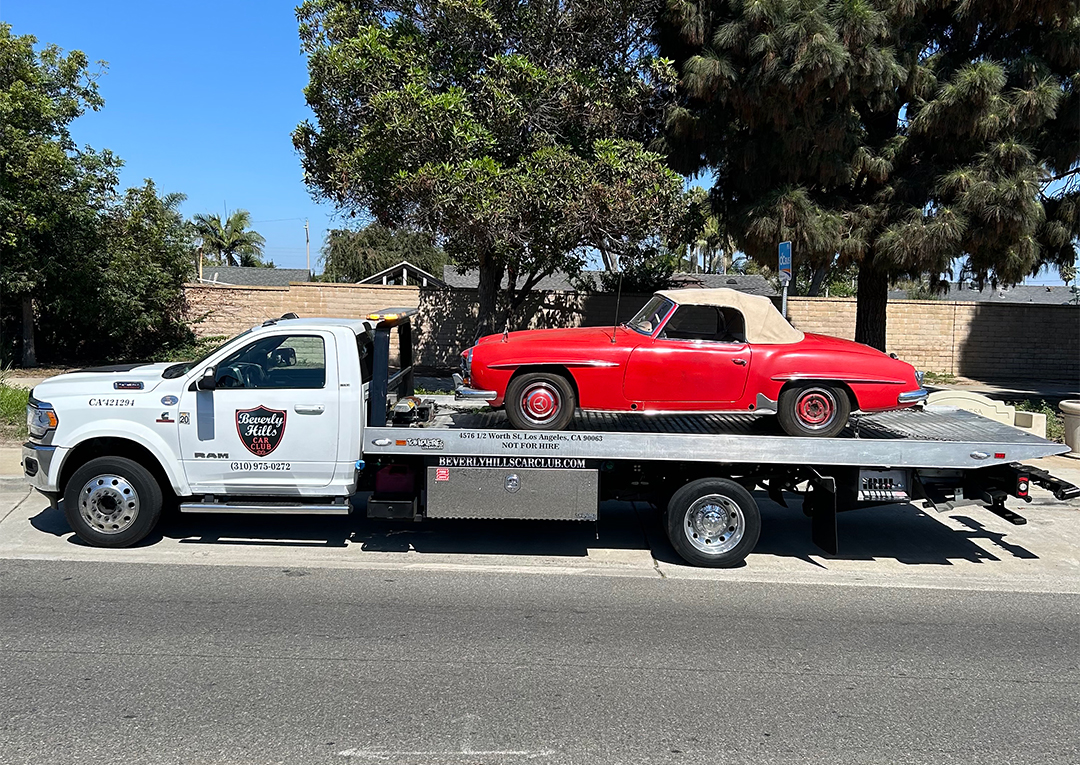
Beverly Hills Car Club has been a trusted name in classic car buying since 2004. We offer fair market valuations, immediate payment, and free nationwide pickup. Whether your 1960 190SL is a pristine matching-numbers survivor, a driver-quality roadster, or a project awaiting completion, we have the expertise to assess it accurately and make a genuine offer. No hidden fees, no manufactured delays — just a clean, professional transaction on your timeline.
Ron S.
1967 Mercedes-Benz 250SL
March 2, 2021
“It was a pleasure to deal with Alex, After speaking with 3 dealers that could purchase my 67 250Sl, I sold it to Alex Manos. He always answered my calls, aggressively sought the purchase, and although someone else met his price I went with Alex. The dollars were in my bank in 2 hours. I recommend him highly.”
Pavel C.
1968 Mercedes-Benz 250SL
February 28, 2021
“5 stars!”
Michael B.
1969 Mercedes-Benz 280SL
February 13, 2021
“Alex was great !! Quick , Honest and Fair. I would sell him a car again should the need arise.”
Adrian R.
1958 Mercedes-Benz 300D Adenauer
February 4, 2021
“Pleasant to deal with, responds swiftly to emails. Hope to deal with him again.”

Robert S.
1968 Mercedes-Benz 250SL
February 3, 2021
“Fair dealing and quick to close the sale.”

Evan K.
1968 Mercedes-Benz 250SL
February 1, 2021
“One of the best customer service experiences ever! I contacted Alex one year ago to discuss the possibility of selling my antique car. I decided to wait. Fast forward to last week. I emailed Alex, and within minutes, he picked up the phone and called me back. And within five minutes of this conversation, we agreed on a price, he wired the funds into my account while I was on the phone with him, and we were all set! Soon thereafter, I heard from various members of his team in order to coordinate the paperwork and transport process. Everyone was extremely professional and helped make this transaction go smoothly. They exceeded my expectations in every way! I highly recommend Alex if you are considering purchasing or selling a classic or exotic car.”
Peter P.
1994 Mercedes-Benz SL600
February 1, 2021
“Gevik is my Man! Always there for a swift response and deal to be made.”

Peter H.
1970 Mercedes-Benz 280SL
January 31, 2021
“I had a great experience in dealing with Alex regarding the purchase of my 1970 Mercedes Benz 280SL, at what I thought was a fair price. They were very professional and courteous and our transaction could not have gone smoother. The funds were wired to me promptly and the car was picked up to be shipped from Hawaii to Los Angeles at the buyer’s expense as promised. I would highly recommend them should you want to sell or buy a classic car. The next time I am in Los Angeles I will make sure and visit their show room.”
Fritz S.
1965 Mercedes-Benz 230SL
December 21, 2020
“Was terrific. Would recommend BHCC and Oliver to everyone.”

Next Steps?
Call Now
Or email via our website and we’ll go over all you need to know to sell your classic!
Send Photos
Just send a few photos, this is often all we need to make an offer!
Get Paid!
We pay via wire transfer promptly upon agreement. Fast and easy!
Get Started!
Welcome!
join our inventory newsletter
Sign-up for our e-mail alerts
join our newsletter
Sign-up for our e-mail alerts
Learn More
or
we buy classic cars
Looking to sell yours?
Contact us
Sell us your car
Pick up from any USA location - Any condition - Top $$$ Paid


Chat With Us!