 English
 Nederlands
 Français
 Deutsch
 Italiano
 Русский
 Español


There’s a particular position in a classic car’s production run that collectors consistently underestimate: the penultimate year. Final-year examples attract buyers who want to own the last of something — the closure narrative, the end-of-an-era premium. Early-year examples attract buyers chasing provenance, low chassis numbers, first-production significance. The year before the last tends to get evaluated purely on its merits, without the inflation that attaches to either pole of the production arc.
1962 MERCEDES-BENZ 190SL, SELLING THAT CLASSIC

At Beverly Hills Car Club, we’ve been acquiring significant classics since 2004. The 190SL has been a consistent part of that work — purchased across every condition grade, configuration, and circumstance the W121 produces, from matching-numbers concours roadsters to disassembled projects and long-stored estate cars. What follows is our account of how the market for 1962 190SLs actually functions, what shapes value in a specific car, and what the realistic selling options look like.
Call Beverly Hills Car Club: 310-975-0272
The 1962 190SL – Market Context
The W121 platform arrived fully formed and changed little across its nine-year run. The M121 engine — 1,897cc displacement, single overhead camshaft, twin Solex 44 PHH carburetors — held its specification through 1963. The four-speed manual gearbox, double-wishbone front suspension, coil-sprung rear swing axle, and unit-body construction are all as established. A 1962 car is mechanically indistinct from a 1959 or a 1960; the platform’s consistency is both its character and its collector appeal.
What distinguishes a 1962 190SL in the market isn’t what Mercedes changed — it’s what the individual car is. Configuration, matching-numbers status, originality of specification, and documentation quality determine which tier a car occupies far more than its position in the production sequence. The penultimate-year angle provides context; the car’s specifics provide the value.
The roadster remains the configuration the market reaches for first, commanding a premium over the coupe that holds consistently across condition grades. Coupes find buyers reliably, but from a narrower audience: those who drive in variable weather, who value the stiffer structure, who have no interest in paying a roadster premium for open-air motoring they won’t use. Both configurations sell; they find different buyers at different price points, and understanding which audience your car serves is part of approaching the market intelligently.
A 1962 roadster accompanied by its original factory hardtop — documented provenance connecting the two clearly established — presents as a more complete car than one where the hardtop has been separated or sourced independently. The W121 market now asks about hardtop provenance as a matter of course rather than an afterthought.
Matching numbers on the engine block and gearbox remain the primary binary in W121 valuation, dividing the market into collector-grade and driver-quality tiers that don’t compress based on presentation or condition elsewhere. Original factory color, verified against build records, and interior specification matching the original configuration have become increasingly meaningful differentiators as the market has matured — a 1962 190SL in documented original specification presents to serious buyers as a different car than one altered from factory, regardless of the quality of any subsequent work. Documentation — Kraftfahrzeugbrief, service records, restoration receipts with photographs, traceable ownership history — is the multiplier across all of these factors, converting a buyer’s visual impression into the kind of confidence that produces committed offers.
What Buyers Look For
When a knowledgeable buyer examines a 1962 190SL, the questions follow a consistent sequence. Understanding what those questions are — and what the honest answers to them mean for your car — is the most useful preparation for any selling conversation.
What do the sills and floors look like? This is always the first structural question on a W121, and for good reason. Unit-body construction means the steel body carries the structural loads directly. The inner and outer sills, floor pans and footwells, battery tray area behind the right front wheel, trunk floor, lower door bottoms, and windscreen frame surrounds are the locations that rust on these cars and that matter most when they do. A buyer distinguishes between surface corrosion — often visually dramatic, structurally minor — and genuine structural compromise, which is expensive to address properly and sometimes concealed beneath cosmetic work.
A car with documented structural restoration tells a clear story. Photographs of the process, receipts, a coherent account of what was replaced and what was retained — these convert what might otherwise be a source of uncertainty into a demonstrable asset. Fresh undercoating on a car with no restoration history tends to prompt questions rather than confidence. Solid, verifiable structure with honest surface patina often reads better to a sophisticated buyer than a fresh cosmetic presentation over an uncertain substrate.
How do the carburetors run? The twin Solex 44 PHH units are the mechanical element most likely to determine whether a test drive confirms or complicates a buyer’s interest. A 190SL with properly maintained or recently rebuilt carburetors — stable idle, clean progression, consistent behavior across the rev range — tells a buyer the car has been looked after mechanically. A car that stumbles, hunts at cruise, or pulls introduces uncertainty that not every buyer can correctly diagnose as a carburetor problem rather than something more fundamental. Documented carburetor service, recent and competent, removes that uncertainty entirely. It’s among the most effective things a seller can do to present a 1962 190SL well.
What’s the engine and gearbox situation? Buyers who know W121s look for oil consumption, compression health, behavior on a cold start, and gearbox feel through the range. These are honest mechanical signals, and honest answers to them are preferable to surprises mid-transaction. A drivetrain with documented recent work tells a story buyers respond to. Deferred maintenance that’s acknowledged early is manageable; discovered late, it damages trust and transactions alike.
What’s been modified, and how? Modifications on a 1962 190SL get evaluated on their specifics rather than their existence. A five-speed conversion with the original gearbox retained, documented, and available alongside the car is a meaningfully different situation than one where the original unit is permanently gone. Sympathetic mechanical upgrades — electronic ignition fitted reversibly, cooling improvements with original components preserved — typically cost nothing in collectibility when properly documented. Significant departures from factory specification, particularly those that are irreversible, reduce the buyer pool in ways that presentation doesn’t recover. We evaluate each car’s specifics honestly and factor modifications accordingly.
What documentation exists? Every buyer’s final question, and in many ways the one that most directly determines how quickly and confidently a purchase completes. An original Kraftfahrzeugbrief or clean title, coherent service history, restoration records with photographs, and a traceable ownership narrative answer the questions buyers bring before they have to ask them. Documentation doesn’t add value to a car abstractly — it converts what a buyer can see into what they can verify, and verification produces the confidence that closes transactions.
What to Send Us
Clear photographs of the car as it actually is — exterior from all angles in good light, interior, engine bay, trunk, undercarriage if accessible, any areas of structural concern, the hardtop if present. The chassis number from the firewall. Whatever documentation accompanies the car, whether comprehensive or minimal. A brief account of the car’s situation: how long it’s been in current ownership, how it’s been stored, what work has been done, what you’re aware of that might affect how we assess it.
That’s enough to start a real conversation. We’ll respond with either a specific offer or a direct explanation of why we’re not making one — along with whatever perspective we can offer on where else to take it. No obligation to proceed either way, and no pressure if you decide not to. When you’re ready, reach out. We’ll take it from there!
Ready to Sell Your 1962 Mercedes-Benz 190SL?
Send photos and basic information about your car to [email protected] or call us directly at 310-975-0272. We’ll respond within 24–48 hours, or less!
Mercedes-Benz 190SL Series
- Selling Your Mercedes-Benz 190SL
- Selling Your 1955 Mercedes-Benz 190SL
- Selling Your 1956 Mercedes-Benz 190SL
- Selling Your 1957 Mercedes-Benz 190SL
- Selling Your 1958 Mercedes-Benz 190SL
- Selling Your 1959 Mercedes-Benz 190SL
- Selling Your 1960 Mercedes-Benz 190SL
- Selling Your 1961 Mercedes-Benz 190SL
- Selling Your 1963 Mercedes-Benz 190SL
Why Choose Beverly Hills Car Club?
Beverly Hills Car Club has been a trusted name in classic car buying since 2004. We offer fair market valuations, immediate payment, and free nationwide pickup. Whether your 1962 190SL is a pristine matching-numbers survivor, a driver-quality roadster, or a project awaiting completion, we have the expertise to assess it accurately and make a genuine offer. No hidden fees, no manufactured delays — just a clean, professional transaction on your timeline.
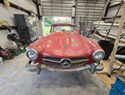
Jacob S.
1960 Mercedes-Benz 190SL
September 21, 2024
“Has a highly professional & experienced staff to handle various steps of the transaction. Appreciated their timely communication and guidance to someone who hasn’t done this before. Highly recommend Alex & his team to anyone.”
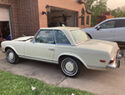
John R.
1969 Mercedes-Benz 280SL California Special
September 17, 2024
“On several occasions I had questions or concerns and on each and every time there was a text that followed with an answer very soon. The phone was answered right away and Alex was very courteous and assisted in getting a solution. Thank you.”
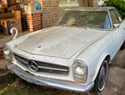
Russell S.
1968 Mercedes-Benz 280SL
August 20, 2024
“I have nothing but good things to say about Alex and his team. His team is upfront, honest, and as professional as it gets. Nothing but class. Highly recommended!!”
Marvin E.
1986 Mercedes-Benz 560SL
August 13, 2024
“Excellent crew to work with. Very Professional and outstanding customer service.”
Thomas Z.
1995 Mercedes-Benz E320 Cabriolet
August 5, 2024
“Excellent service and prompt reply.”
Gardener B.
1969 Mercedes 280SE Cabriolet
July 13, 2024
“Such an easy and great experience. Selling my fathers vintage Mercedes was one of the most emotional experiences, and Alex and his team made me comfortable knowing it was going to someone who’s gonna love and care for it…”
Jorge C.
1961 Mercedes-Benz 190SL
June 24, 2024
“Ila, excellent person and vendor.”
Jesus S.
1993 Mercedes-Benz 600SL
June 19, 2024
“I bought a car from Gevik 6 years ago and everything went smooth and wonderful. This time, the service and attention was outstanding!”
Gil M.
1958 Mercedes 220S Cabriolet
June 15, 2024
“I had a Mercedes barn find for sale (actually 2 different Mercedes) and contacted Alex. I have never sold a vehicle online before. Alex and his employees made the entire process very easy. They sent all the paperwork for us to complete, they were patient while we waited for the cashier checks to clear the bank, and then then sent someone to pick up the vehicles. They were a great group to work with and really put us at ease.”

Next Steps?
Call Now
Or email via our website and we’ll go over all you need to know to sell your classic!
Send Photos
Just send a few photos, this is often all we need to make an offer!
Get Paid!
We pay via wire transfer promptly upon agreement. Fast and easy!
Get Started!
Welcome!
join our inventory newsletter
Sign-up for our e-mail alerts
join our newsletter
Sign-up for our e-mail alerts
Learn More
or
we buy classic cars
Looking to sell yours?
Contact us
Sell us your car
Pick up from any USA location - Any condition - Top $$$ Paid


Chat With Us!