 English
 Nederlands
 Français
 Deutsch
 Italiano
 Русский
 Español


The 190SL that left Stuttgart in 1961 carried something its earlier counterparts didn’t: the weight of a known ending. Mercedes-Benz had been developing what would become the 230SL Pagoda, and within the company — and eventually among the enthusiast press — it was understood that the W121’s run was approaching its conclusion. The 1961 buyers who walked into a Mercedes dealership and chose a new 190SL weren’t choosing a car in its prime promotional moment. They were choosing a car they’d evaluated on its merits, fully aware of what it was and what it wasn’t, at a point in the model’s life when the marketing noise had long since settled.
1961 MERCEDES-BENZ 190SL, SELLING YOUR CLASSIC SL
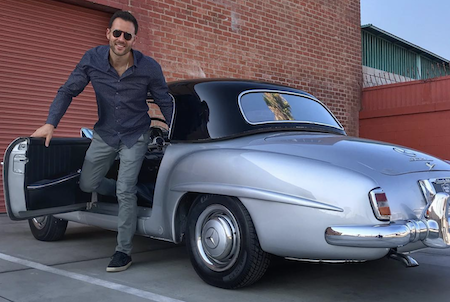
At Beverly Hills Car Club, we’ve been buying significant classic SL’s since 2004 — starting in Los Angeles and working with sellers across 48 continental states and Hawaii ever since.
Call Beverly Hills Car Club: 310-975-0272
Where the 1961 Cars Sit — And What the Market Does With It
The 1961 190SL occupies a position that requires some precision to describe accurately. It’s a late-production car — two years from the end of the W121 run — but it doesn’t carry the “last of the line” premium that true final-year examples command in some collector segments. What it carries instead is something arguably more useful: the full maturity of the platform without the slightly inflated pricing that final-year cars sometimes attract from buyers who want to own the last of something rather than the best of something.
The mechanical specification is unchanged from what Mercedes-Benz established at the model’s introduction and refined through the late 1950s. The M121 engine — 1,897cc, single overhead camshaft, twin Solex 44 PHH carburetors producing approximately 105 horsepower — drives through a four-speed manual gearbox with synchromesh on the upper three gears. Double-wishbone front suspension, coil-sprung rear swing axle, unit-body construction. The 1961 cars are the platform fully sorted, and buyers who follow W121s understand that.
What the market actually does with a 1961 190SL depends almost entirely on the specific car rather than the model year. Configuration, matching-numbers status, originality, and documentation quality are the variables that determine which tier a car occupies — not where 1961 falls in the production sequence. That’s a clarifying frame for sellers: the year is context, not destiny. The car’s individual character is what drives the outcome.
Roadster versus coupe remains the primary configuration divider. The roadster commands a consistent premium — typically meaningful, always present — over comparable coupes. The coupe finds its buyers reliably, but from a narrower audience with specific priorities: all-weather usability, the slightly stiffer structure, a preference for the closed roofline. A 1961 roadster accompanied by its original factory hardtop, with clear provenance connecting the two, presents to buyers as a more complete car than one where the hardtop has been separated or sourced independently. The W121 collector community has grown specific enough that hardtop provenance is now a direct question rather than an afterthought.
Matching numbers on the engine block and gearbox divide the market into tiers that don’t compress based on presentation. A 1961 190SL with verifiable matching components reaches the collector-grade buyer segment. One with correct-specification replacements — however carefully sourced and fitted — reaches the driver-quality segment. These are different markets with different pricing dynamics, and understanding which one your car occupies before the conversation starts saves everyone time.
Original factory specification — color verified against build records, interior matching original configuration, options present and correct — has become a meaningful differentiator as the W121 market has matured. A 1961 car in documented original specification presents differently than one repainted in an off-catalog color or fitted with a non-original interior, regardless of how carefully any of that work was done. The gap between those two cars has widened as collector knowledge has deepened.
Documentation is the variable that converts physical condition into buyer confidence. An original Kraftfahrzeugbrief or clean title, service records spanning the car’s history, restoration documentation with photographs and receipts, traceable ownership history — these don’t just tell a story, they answer the questions serious buyers bring to every W121 transaction before they ask them.
How Your Selling Options Compare
Private listing reaches an engaged, knowledgeable audience for W121s through platforms like Bring a Trailer and Hemmings, and for sellers who value managing the process directly — the inquiries, the conversations with enthusiasts, the negotiation — it can be genuinely satisfying. The trade-off is an unpredictable timeline, a significant volume of contacts that don’t complete, and offers that frequently arrive contingent on circumstances that may shift. The right private buyer exists; finding them requires patience that some sellers have and some reasonably don’t.
Auction consignment at a major house is the right answer for a first-quality 1961 190SL with strong documentation and matching-numbers specification when the seller has time to wait for the right event. The ceiling under those circumstances is real. So are the seller’s premium, transport costs, and the multi-month consignment timeline — all of which subtract from the hammer price before proceeds reach the seller, regardless of outcome. A car that doesn’t sell at its first appearance requires starting the process again.
A direct offer from Beverly Hills Car Club is a specific number — not a range — arrived at within 24–48 hours of receiving good information about your car. Top dollar paid and immediate transactions: if an offer is made and agreed to, payment wires promptly and logistics are coordinated around your schedule. No fees to absorb, no timeline measured in months, no pipeline of buyers to manage. The transaction completes in days. We don’t renegotiate prices once given, we don’t make lowball offers, and if a car isn’t the right fit we say so directly rather than letting the conversation run longer than it should.
Complicated Situations Welcome
Estate sales, divorce circumstances, storage liens, title complications spanning multiple states, cars that haven’t moved under their own power in a decade, stalled restorations, disassembled projects — these situations reach us regularly and don’t require special handling. We work with executors and estate attorneys who need a defensible valuation and a clean transaction on a probate timeline. We provide the neutral assessment that divorce circumstances require. We navigate lien resolution and multi-state title work when the car warrants the effort. We evaluate incomplete projects on what’s actually present rather than passing automatically because a car isn’t finished.
What we need to get started is straightforward: clear photographs of the car as it actually is — exterior from all angles in good light, interior, engine bay, trunk, undercarriage if accessible, any areas of concern, the hardtop if present. The chassis number from the firewall. Whatever documentation accompanies the car. A brief account of the situation — how long you’ve owned it, how it’s been stored, what you’re aware of that might affect value.
We’ll respond within 24–48 hours, often sooner. If we’re making an offer, it’s a specific number with reasoning behind it. If we’re not, we’ll explain directly and give you our honest read on where else to take it. If an offer is made and agreed to, payment wires and everything else follows on your timeline — without requiring you to manage the moving parts.
When you’re ready, reach out. We’ll take it from there.
Ready to Sell Your 1961 Mercedes-Benz 190SL?
Send photos and basic information about your car to [email protected] or call us directly at 310-975-0272. We’ll respond within 24–48 hours – or less!
Mercedes-Benz 190SL Series
- Selling Your Mercedes-Benz 190SL
- Selling Your 1955 Mercedes-Benz 190SL
- Selling Your 1956 Mercedes-Benz 190SL
- Selling Your 1957 Mercedes-Benz 190SL
- Selling Your 1958 Mercedes-Benz 190SL
- Selling Your 1959 Mercedes-Benz 190SL
- Selling Your 1960 Mercedes-Benz 190SL
- Selling Your 1962 Mercedes-Benz 190SL
- Selling Your 1963 Mercedes-Benz 190SL
Why Choose Beverly Hills Car Club?
Beverly Hills Car Club has been a trusted name in classic car buying since 2004. We offer fair market valuations, immediate payment, and free nationwide pickup. Whether your 1961 190SL is a pristine matching-numbers survivor, a driver-quality roadster, or a project awaiting completion, we have the expertise to assess it accurately and make a genuine offer. No hidden fees, no manufactured delays — just a clean, professional transaction on your timeline.

Wolfgang K.
1994 Mercedes-Benz E320 Cabriolet
January 6, 2024
“Prima nette, schnelle, freundliche und kompetente Beratung.”
Susan W.
1977 Mercedes-Benz 240D
January 3, 2024
“The whole team made this a seamless transaction. What a group of professionals! These folks go above and I appreciate all the help they provided. Very fair price as well. Highly recommend them!”
Michael G.
1969 Mercedes 300SEL 6.3
January 1, 2024
“I’m in my mid 70’s and I knew deep down I was never going to get these 3 cars running again which I neglected for many years after I purchased an older boat. They were a 69 and 70 Mercedes 300SEL 6.3 and and 86 Mercedes 560SEC. Alex agreed to purchase all 3 with very little haggling. I probably didn’t get top dollar for the cars but the transaction was very easy and I really needed the space in my garage and at my commercial property. I got what I asked and was promptly sent the monies even before the cars were picked up. His staff was very professional about getting all the paperwork done and arranging the transportation. In less than 2 weeks after my initial call to Alex, the cars were picked up and shipped from Everett, WA to Los Angeles. Selling these cars has given me a lot of peace of mind.”
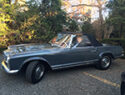
Chris S.
1966 Mercedes-Benz 230SL
December 31, 2023
“After my father’s passing I became the new owner of a classic car – a 1966 Mercedes-Benz – and it seemed that everyone had advice for me on its value, and how I should go about selling it. The only voice of reason through the whole process was Alex Manos. Alex and his team make the experience of selling a classic car straightforward and easy. When life got busy and I didn’t return Alex’s email, he would call me to follow-up. Alex had answers for every one of my questions, and when we made the deal, the money was wired to our account within minutes. Of all of the issues I had to work through during the settling of my father’s estate, selling his classic car was the easiest and most positive experience, all thanks to Alex and his team. If you’re wondering whether to work with Alex Manos to buy or sell your classic car, I recommend him highly. An absolutely frictionless experience, from beginning to end. Thank you Alex & team!”
Hal B.
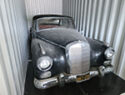
1958 Mercedes-Benz 300D Adenauer
December 25, 2023
“When it was time to sell a classic project car, Alex and BHCC gave me the best offer, provided all of the paperwork, made all of the arrangements for shipping, and paid me in less than a day. I couldn’t get over and smooth and easy everything was. I would happily sell to BHCC again!”
Brian L.
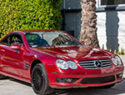
2003 Mercedes-Benz SL 55 AMG
December 21, 2023
“Great service awesome show room fantastic experience!”
Larry A.
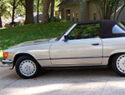
1989 Mercedes-Benz 300SL
December 15, 2023
“Excellent service at every level. From my initial contact with Alex through the pickup of my vehicle here in Tulsa OK. No gaps. No irritants. All positive interactions with his staff. Well done!”
Fabio C.
1983 Mercedes-Benz 380SL
December 2, 2023
“Fantastic ! I purchased two cars from him. Professional, serious, punctual, collaborative.”
George N.
1971 Mercedes-Benz 280SL
November 27, 2023
“Discussed the car with Alex, made a deal. Next day the money was in the bank. The car was picked up by a respectable hauler. Deal done, I am very pleased.”

Next Steps?
Call Now
Or email via our website and we’ll go over all you need to know to sell your classic!
Send Photos
Just send a few photos, this is often all we need to make an offer!
Get Paid!
We pay via wire transfer promptly upon agreement. Fast and easy!
Get Started!
Welcome!
join our inventory newsletter
Sign-up for our e-mail alerts
join our newsletter
Sign-up for our e-mail alerts
Learn More
or
we buy classic cars
Looking to sell yours?
Contact us
Sell us your car
Pick up from any USA location - Any condition - Top $$$ Paid


Chat With Us!